Table of Contents
Affiliate link notice: As an affiliate of BetterHelp and other third-party vendors, we may receive compensation if you make a purchase using the links provided on this page. For more information, visit our disclosure page.
Last Updated on December 4, 2025 by Randy Withers
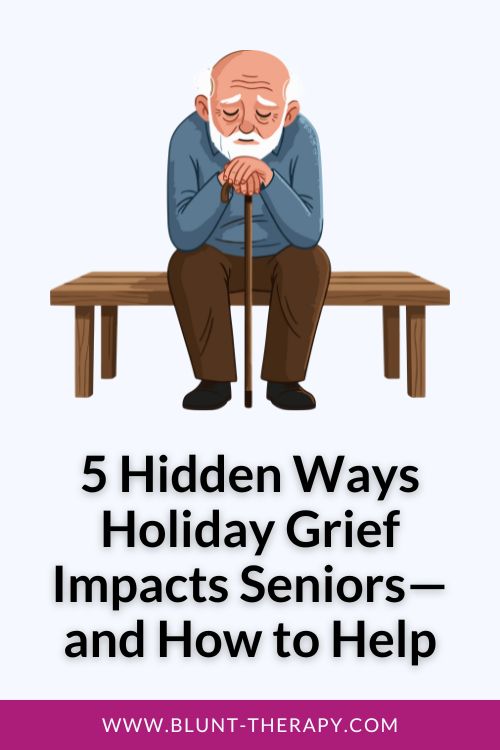
The holidays are supposed to be a time of comfort, tradition, and connection. At least, that’s the story we’re sold. But for many older adults, the season doesn’t bring warmth—it brings a familiar ache. A quiet heaviness. A sudden awareness of who’s missing, what has changed, and how sharply memories can cut when surrounded by celebration.
This isn’t just “holiday stress.” It isn’t moodiness or irritability. It’s holiday grief—a unique combination of loss, reflection, nostalgia, and emotional fatigue that becomes more pronounced as people age. And if we’re not paying attention, we can easily miss what older adults are actually going through. They may smile, make small talk, or try to “be pleasant,” but beneath the surface is often a mix of grief triggers, shifting family roles, and memories that don’t soften just because the calendar says it’s time to celebrate.
What makes holiday grief particularly intense is the collision of two realities: the emotional predictability of seasonal rituals, and the emotional unpredictability of aging. The things older adults used to look forward to—hosting gatherings, being surrounded by family, taking part in familiar traditions—don’t always fit their lives anymore. Their bodies change. Their families change. Their traditions change. But the holidays stay the same.
This article explores five reasons holiday grief hits older adults harder than most people realize, along with practical ways to support them. It also highlights how a stable home environment can become an emotional anchor, giving older adults a sense of control and grounding during a season that often feels overwhelming.
1. Holidays Reactivate Old Losses
Holidays are saturated with memory cues: familiar songs, foods, decorations, family rituals. For older adults, those cues don’t just evoke nostalgia—they reawaken deep emotional imprints tied to people who have died or roles they no longer occupy. A certain ornament on the tree might bring back a spouse who passed away. A favorite recipe might resurrect the absence of a parent or sibling. Even happy memories can hurt when the people in them are gone.
Holiday grief isn’t about a lack of gratitude. It’s about the emotional realism of aging. The older someone is, the more likely it is that they’ve lived through multiple major losses—and that the holidays place those losses front and center.
2. Accumulated Grief Builds Over Time
Loss in older adulthood is rarely singular. Many seniors have experienced multiple layers of grief—partners, siblings, lifelong friends, sometimes even children. That accumulation makes holiday grief heavier, not because older adults are “dwelling,” but because the emotional math changes.
This reality is reflected in the statistic that Around 71% of adults over 65 have experienced at least one bereavement in the last two and a half years, and Nearly three-quarters of the 2.8 million deaths in America in 2017 happened among people aged 65 and older, making loss a near-universal experience for this demographic. Holidays intensify those emotional layers by clustering memories together in rapid succession. It’s not one loss resurfacing—it’s many.
3. Social Pressure to Be Joyful Creates Emotional Conflict
Holiday messaging is aggressive: be merry, be cheerful, be full of gratitude. But if you’re grieving, those expectations can feel suffocating.
Many older adults don’t want to “bring down the mood,” especially when younger family members are excited about the festivities. So they do what they’ve always done—they push through. They stay quiet. They pretend. That emotional split between outward behavior and inward truth amplifies loneliness, even in a room full of people.
Holiday grief often isn’t the grief itself—it’s the feeling that there’s no socially acceptable place to put it.
4. Shifts in Family Dynamics Highlight Absence and Change
Families change. People move. Kids grow up, marry, have children, become busy. Traditions shift to accommodate work schedules, travel limitations, or younger families. For older adults, these shifts don’t just represent change—they communicate loss of role, loss of routine, and sometimes loss of identity.
They may miss their former role as the host, the matriarch/patriarch, the person everyone gathered around. The holidays become a mirror reflecting how life has moved forward, sometimes with them, sometimes without them. That difference can hurt just as much as missing a specific person.
5. A Stable Home Environment Provides Comfort and Control
When grief becomes more active during the holidays, the environment matters more than people realize. Home isn’t just a living space—it’s a container for predictability, autonomy, and emotional grounding.
A stable home environment allows older adults to decide what they can handle emotionally: how much decorating to do, how many visitors to host, what rituals to maintain, and what to skip this year. This is especially important given that Around 14% of seniors aged 70 years and over deal with a mental disorder, and that number could double by 2030. It doesn’t help that there’s a shortage of mental health professionals who specialize in older patients, which places most of the responsibility for support on families and communities.
For older adults navigating depression, anxiety, or cognitive changes, too much stimulation or change can overwhelm the nervous system. Stability, routine, and familiarity can calm it. That’s why home often becomes the emotional “safe zone” during holiday grief.

How a Stable Home Environment Fosters Stability in Older Adults
We tend to overlook how profoundly environment shapes emotional well-being—especially for older adults. When holiday grief becomes more active, the physical space around a person can either soothe their nervous system or overwhelm it. A stable home environment creates a sense of grounding that older adults often can’t access in unfamiliar or overstimulating settings. In their own space, they can lean on the benefits of stable home environments such as predictability, control, routine, and familiarity—each of which becomes more valuable as emotional intensity increases.
Stability doesn’t just make life “easier”; it provides psychological scaffolding during what is, for many older adults, an emotionally loaded season. Home is where sensory input is predictable—lighting, sounds, smells, and personal belongings all exist in familiar patterns. That predictability reduces cognitive load, which is especially important for seniors experiencing anxiety, depression, or mild cognitive changes. When memories resurface, home acts as a buffer rather than an amplifier.
A stable environment also offers autonomy, something older adults often lose in institutional living or during large family gatherings. At home, they can choose how much holiday stimulation they want to take in—what decorations to put up, which memories to engage with, and which ones to avoid this year. They can decide whether to sit with their grief quietly, share it with a family member, or shift focus toward a comforting routine. Choice is an underrated protective factor, and home gives them room to exercise it.
Familiar surroundings also support self-regulation. A predictable environment allows older adults to anchor themselves using familiar rituals: morning coffee in a favorite chair, afternoon light in the same spot on the wall, a nightly routine that signals safety to the brain. These subtle environmental cues help the body stay oriented and calm during times when emotions may feel unpredictable.
Finally, a stable home environment can act as an emotional sanctuary when the outside world feels too loud or demanding. During the holidays, sensory overload—music, crowds, decorations, and social pressure—can increase grief’s intensity. Home creates a private space where older adults can decompress, reflect, or simply be without needing to mask their feelings. For those who feel displaced by changing family dynamics or overwhelmed by social expectations, home provides a consistent reminder of who they are and what still belongs to them.
In short, home doesn’t eliminate holiday grief, but it strengthens an older adult’s capacity to carry it. Stability gives grief somewhere safe to land.
4 Ways Families Can Support Older Adults Struggling With Holiday Grief
You don’t have to erase grief to help an older adult through the holidays. You just have to walk with them in it.
1. Acknowledge Holiday Grief Directly
Instead of assuming your loved one is “doing fine,” gently name what might be happening. Say something like:
“This time of year can be really hard—how are you feeling about the holidays lately?”
This opens the door for honesty, especially for those who have experienced or are experiencing clinical depression might struggle to express their emotions unprompted.
2. Invite Stories Instead of Avoiding Sadness
Older adults often need space to talk about the people they’ve lost. Stories help them feel connected rather than isolated. Ask permission, then gently invite memories.
3. Adjust Traditions Instead of Forcing Old Ones
Maybe the big dinner becomes a smaller brunch. Maybe one tradition is paused this year. Flexibility reduces pressure and honors the emotional and physical reality of aging.
4. Protect the Role of Home
If the older adult still lives at home, avoid making abrupt changes to the setup or routine unless absolutely necessary. If they’ve moved, bring elements of home to them: favorite foods, small décor, meaningful items. Stability is emotional medicine during holiday grief.
Final Thoughts
Holiday grief is not a sign that an older adult is “dwelling in the past” or incapable of joy. It’s a sign that they have lived deeply, loved deeply, and lost deeply. The holidays simply illuminate what is already there.
As families, we can choose to meet older adults with understanding rather than pressure, presence rather than solutions, flexibility rather than expectations. When we acknowledge the reality of holiday grief—and when we protect their stability, autonomy, and emotional safety—we give older adults the space to move through the season in a way that feels honest and humane.
Grief is not the enemy of the holidays. Silence is. Connection is the antidote.
And sometimes, the greatest gift you can give an older adult is simply permission to feel how they feel—and someone willing to sit beside them while they do.