
Table of Contents
Affiliate link notice: As an affiliate of BetterHelp and other third-party vendors, we may receive compensation if you make a purchase using the links provided on this page. For more information, visit our disclosure page.
Last Updated on October 31, 2026 by Randy Withers
You can care deeply about your health and still dread a visit to the doctor. For some people, the thought of a blood test, an uncomfortable examination, or an unexpected diagnosis is enough to postpone an appointment for months. Even routine preventive care can become a source of considerable anxiety.
Some people have endured painful or traumatic medical experiences. Others have no obvious reason to fear a doctor’s visit but still experience intense distress at the prospect. Because avoidance often provides immediate relief, it can become a difficult habit to break.
Medical anxiety affects people for different reasons. Those differences help explain why a routine appointment feels manageable to one person and overwhelming to another.
What Is Medical Anxiety?
Medical anxiety is a broad term for fear or distress associated with healthcare appointments, medical procedures, or interactions with medical professionals. It is not a formal psychiatric diagnosis, and its severity varies from person to person.
For some, anxiety appears shortly before a procedure, such as a blood draw or dental examination. Others experience persistent dread that begins days before an appointment. Physical symptoms may include a rapid heartbeat, sweating, nausea, dizziness, or muscle tension. In severe cases, the fear can interfere with a person’s ability to obtain necessary medical care.
Medical anxiety in this context differs from health anxiety, which involves excessive worry about having or developing a serious illness.
The fear can take several forms, depending on which part of the medical experience a person finds most distressing.
5 Common Examples of Medical Anxiety
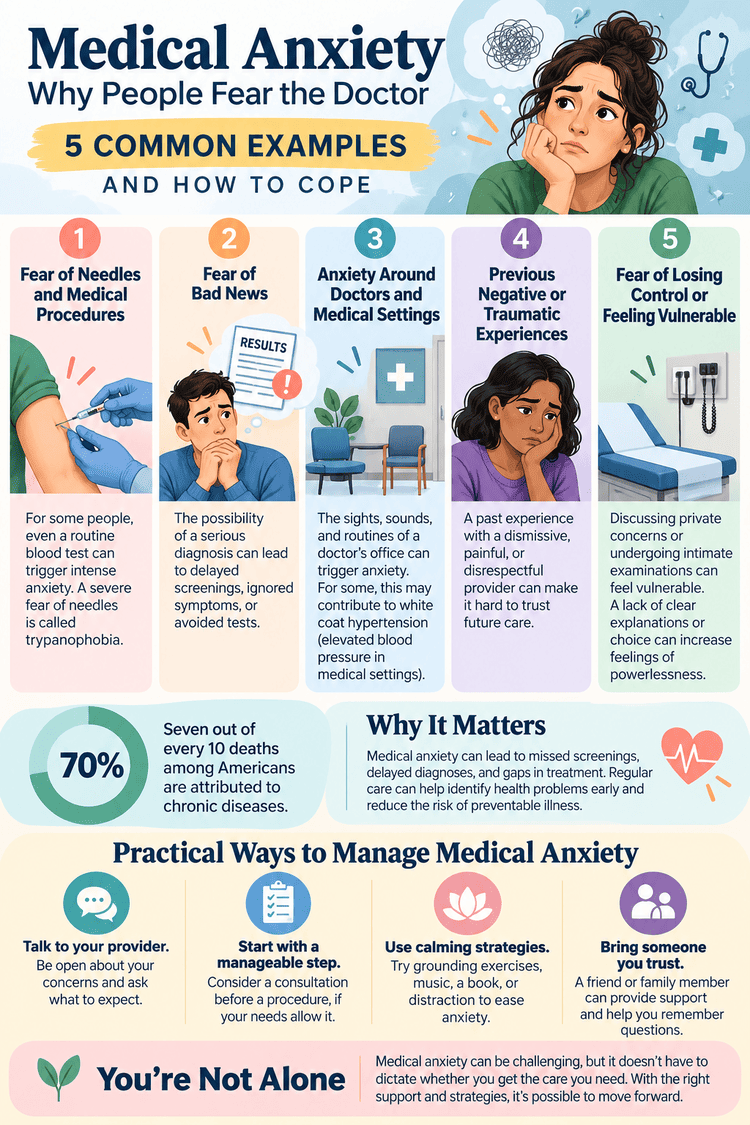
1. Fear of Needles and Medical Procedures
For someone with a severe fear of needles, a routine blood test can feel anything but routine. The anticipation may cause a racing heart, dizziness, nausea, or an overwhelming urge to leave. Some people become so distressed that they postpone vaccinations, blood tests, or other necessary procedures indefinitely.
An intense fear of needles is known as trypanophobia, a type of specific phobia. It may develop after a painful experience, although some people cannot identify an event that explains their fear. In certain cases, needles can trigger a sudden drop in blood pressure that causes faintness or fainting.
A person may understand the importance of a recommended test yet feel unable to face the procedure itself.
2. Fear of Bad News
Sometimes the most frightening part of a medical appointment has nothing to do with the examination. It’s the possibility of what the doctor might discover.
A person who fears a serious diagnosis may postpone a cancer screening, ignore persistent symptoms, or avoid routine tests because they dread the results. This fear can be especially powerful for someone who has witnessed a loved one’s serious illness or received an unexpected diagnosis.
The mind may jump from a routine test to the worst possible outcome, long before there is evidence that anything is wrong. Avoidance offers temporary relief from that uncertainty, but it can delay the discovery of a condition that might respond better to early treatment.
3. Anxiety Around Doctors and Medical Settings
Some people feel calm until they enter a doctor’s office. The familiar sights, sounds, and routines of a medical visit can trigger anxiety before the examination begins.
One phenomenon associated with medical settings is white coat hypertension, sometimes called white coat syndrome. This occurs when blood pressure readings are elevated in a medical setting despite normal readings outside it. Anxiety during the appointment may contribute to the increase, although not everyone who feels nervous at the doctor’s office has white coat hypertension.
For some patients, the anxiety extends beyond blood pressure. They may feel tense, struggle to concentrate on what the doctor says, or rush through the visit without asking important questions. Others may avoid appointments altogether because of the distress they associate with medical settings.
4. Previous Negative or Traumatic Healthcare Experiences
Trust can be difficult to rebuild after a healthcare experience that left someone frightened, humiliated, or unheard.
Perhaps a doctor dismissed a patient’s symptoms, a procedure caused unexpected pain, or a medical professional failed to explain what was about to happen. Others have faced discrimination or disrespect because of their weight, identity, appearance, or financial circumstances.
A 2024 survey found that 32% of Americans have avoided medical care due to negative experiences with a previous doctor.
A single upsetting encounter does not necessarily cause lasting medical anxiety. However, repeated negative experiences or a traumatic event can shape how someone views future care. A new appointment may evoke fear or distrust before the patient has even met the provider.
5. Fear of Losing Control or Feeling Vulnerable
Medical care sometimes requires people to trust someone they barely know. They may need to discuss private concerns, undergo intimate examinations, or agree to procedures they do not fully understand.
For some, that vulnerability is deeply uncomfortable. They may fear embarrassment, worry that their concerns will be dismissed, or feel anxious about what happens if they want a procedure to stop.
Poor communication can intensify these fears. Patients who don’t understand what a procedure involves or what choices they have may feel powerless. This can be particularly difficult for people with a history of trauma. Clear explanations, informed consent, and respect for personal boundaries can help patients retain a sense of control over their care.
How Medical Anxiety Can Interfere With Preventive Care
Preventive care includes recommended vaccinations, blood pressure checks, cancer screenings, and other services based on a person’s age, medical history, and risk factors. These services can help identify health problems early and reduce the risk of preventable illness.
Chronic diseases illustrate why timely care matters. An estimated seven out of every 10 deaths among Americans are attributed to chronic diseases. Although not all chronic diseases are preventable, regular medical care can help identify risk factors, detect certain conditions early, and manage existing health problems before complications arise.
For someone with medical anxiety, fear may lead to missed screenings, delayed diagnoses, or gaps in treatment. The longer these delays continue, the greater the chance that a manageable health concern could become more difficult to address.
How to Manage Medical Anxiety and Get the Care You Need
Medical anxiety can be difficult to overcome, especially if you’ve avoided healthcare for years. A few practical steps may help make your next appointment more manageable.
- Tell your provider what makes you anxious. Be specific about your concerns, whether you fear needles, test results, or a procedure. Ask what to expect and let the staff know if you need extra time or a break. If a provider dismisses your concerns, consider whether another healthcare professional would be a better fit.
- Start with a manageable step. If an appointment feels overwhelming, contact the office beforehand to discuss your concerns. You might begin with a consultation rather than a procedure, provided your medical needs allow it.
- Find ways to ease your anxiety. Grounding exercises may help, such as deliberately tensing and relaxing your muscles to relieve discomfort. Music, a book, or a conversation may also help. Distraction can help interrupt rumination and shift your attention away from anxious thoughts. If you tend to faint during needle procedures, ask your provider about appropriate techniques and precautions.
- Bring someone you trust. A friend or family member can provide emotional support, help you remember questions, or accompany you during an examination if the provider permits it.
If fear repeatedly causes you to cancel appointments or avoid necessary care, consider professional support. Cognitive behavioral therapy (CBT), particularly exposure-based treatment for specific phobias, can help reduce anxiety and avoidance over time.
Final Thoughts
Medical anxiety can be persistent, but it doesn’t have to dictate whether you receive care. A provider who listens to your concerns, explains your options, and respects your boundaries can make a difficult appointment feel more manageable. Professional support can also help if fear continues to interfere with your health.
You don’t have to eliminate every trace of anxiety before you make an appointment. The goal is to reach a point where fear no longer makes your healthcare decisions for you.