Table of Contents
Affiliate link notice: As an affiliate of BetterHelp and other third-party vendors, we may receive compensation if you make a purchase using the links provided on this page. For more information, visit our disclosure page.
Last Updated on August 31, 2026 by Randy Withers
Searching for online marriage counseling can feel overwhelming. Dozens of platforms advertise relationship support, but not all services are equal — and not every therapist who offers “couples therapy” has specialized training in relationship dynamics. For couples facing communication breakdown, infidelity, emotional distance, or recurring conflict, the stakes are too high to rely on vague credentials or marketing language.
When we use the term marriage counselor in this article, we are referring to licensed mental health professionals who are qualified to provide couples therapy. This typically includes Licensed Marriage and Family Therapists (LMFTs), as well as Licensed Professional Counselors (LPC or LCMHC), Licensed Clinical Social Workers (LCSW), and Licensed Psychologists.
While their licensing titles vary by state, all are required to hold an active state license and at minimum a master’s degree in a relevant mental health field. For clarity and brevity, we will refer to these professionals as marriage counselors or marriage and family therapists, while acknowledging that licensure requirements differ by jurisdiction.
The question, then, is not simply where to find a therapist — it is how to identify a qualified marriage counselor who has the training, oversight, and clinical background necessary to guide couples through complex relational challenges.
Before reviewing specific platforms, it helps to understand why couples seek counseling in the first place — and what separates a directory listing from a professionally structured therapeutic service.
Why Do Couples Seek Counseling?
Couples rarely wake up one morning and decide casually to begin therapy. Most seek counseling after patterns have repeated long enough to create emotional exhaustion or distance. Communication may feel strained or defensive. Trust may have been broken. Intimacy — emotional or physical — may have diminished. In other cases, a major life transition such as parenthood, relocation, career stress, or illness exposes vulnerabilities that were previously manageable.
For some couples, conflict is frequent and intense. For others, the issue is not volatility but disengagement — two people living parallel lives with little meaningful connection. Many partners describe feeling misunderstood, unheard, or chronically criticized. These dynamics, if left unaddressed, tend to calcify rather than resolve themselves.
Online marriage counseling has become an increasingly common entry point for couples who want professional support without the logistical barriers of in-person scheduling. Virtual platforms allow partners to access licensed clinicians from home, which can reduce scheduling strain, travel time, and, for some couples, the initial hesitation associated with walking into a physical office.
It is important to note, however, that convenience alone does not determine quality. The effectiveness of online marriage counseling depends on the training of the therapist, the structure of the platform, and the couple’s willingness to engage honestly in the process.
Understanding these motivations clarifies the next step: how to evaluate whether an online platform offers access to qualified marriage counselors — not just availability, but clinical competence.
Evaluating Online Marriage Counseling Platforms: Our Methodology
When evaluating online marriage counseling platforms, visibility in search results or popularity alone is not enough. Couples deserve access to licensed professionals with appropriate training in relationship therapy. The following criteria guided the selection of the platforms reviewed in this article.
1. Verified Licensure and Educational Standards
All platforms included here require therapists to hold active state licensure and at minimum a master’s degree in a recognized mental health discipline. This may include Licensed Marriage and Family Therapists (LMFTs), Licensed Professional Counselors (LPC or LCMHC), Licensed Clinical Social Workers (LCSW), or Licensed Psychologists. Licensing requirements vary by state, but all involve graduate-level education, supervised clinical hours, and successful completion of licensing examinations.
Online marriage counseling should be delivered by clinicians legally authorized to practice psychotherapy in the client’s state of residence. This is a non-negotiable baseline standard.
2. Couples-Specific Clinical Focus
Not all therapists who provide individual therapy are equally trained in couples work. Relationship counseling requires specialized understanding of communication dynamics, attachment patterns, conflict cycles, and structured interventions such as Emotionally Focused Therapy (EFT), the Gottman Method, or other evidence-based approaches.
The platforms reviewed here either specialize in couples therapy or provide clear access to clinicians who do.
3. Transparency in Matching and Selection
The structure of the platform matters. Some services allow couples to browse therapist profiles and choose directly. Others use algorithm-based matching systems. Both models can work effectively, but transparency around how therapists are selected and assigned is important for informed decision-making.
4. Platform Structure and Accessibility
Online marriage counseling platforms vary in format. Some operate as therapist directories. Others follow subscription-based models with messaging features. Some offer intensive formats or retreat-style programming conducted virtually.
Understanding whether the model fits your relationship’s needs is just as important as therapist credentials.
These criteria provide a framework for evaluating platforms beyond surface-level marketing. The goal is not to identify a single “best” option, but to highlight well-established online therapy platforms that meet baseline professional standards and offer structured access to licensed marriage counselors.
5 Well-Established Online Therapy Platforms That Offer Marriage and Couples Counseling
With the above criteria in mind, the following platforms represent well-established options for couples seeking online marriage counseling. Each provides access to licensed mental health professionals and operates within structured service models designed to facilitate relationship-focused therapy.
While their formats differ — ranging from searchable therapist directories to subscription-based platforms and intensive retreat-style programs — all require clinicians to hold active state licensure and appropriate graduate-level training. The distinctions between them lie less in basic qualifications and more in how therapy is delivered, how therapists are matched, and what type of relationship support each model prioritizes.
Understanding those differences can help couples determine which platform aligns most closely with their needs, preferences, and expectations for online marriage counseling.
Zencare
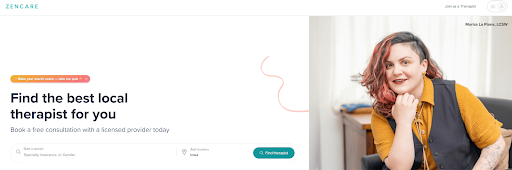
Zencare operates primarily as a therapist directory rather than a subscription-based therapy platform. For couples seeking online marriage counseling, this model offers one clear advantage: the ability to review and directly choose a licensed clinician rather than being automatically assigned through an algorithm.
The platform allows users to filter therapists by specialty, identity, therapy approach, insurance participation, and geographic location. Couples can review detailed therapist profiles, including credentials, areas of focus, and introductory videos. This level of transparency can be especially helpful for partners who want to evaluate fit before committing to a first session.
Because Zencare functions as a directory, the experience depends largely on the individual therapist selected. The clinicians listed on the platform are required to hold active state licensure and meet professional standards, but therapeutic depth may vary depending on the provider’s training in couples-specific modalities such as Emotionally Focused Therapy or the Gottman Method.
For couples who value autonomy in selecting their therapist and prefer to compare options before beginning treatment, Zencare offers a structured entry point into online marriage counseling without locking clients into a subscription model.
Key Features:
- Searchable directory of licensed therapists
- Advanced filtering based on specialty, identity, and insurance
- Free initial phone or video consultations to assess fit
- Direct therapist selection rather than algorithm-based matching
ReGain

ReGain is a subscription-based online marriage counseling platform owned by BetterHelp and dedicated specifically to couples therapy. Unlike directory-style services, ReGain uses a matching process to assign couples to a licensed therapist based on information gathered during an initial intake questionnaire.
The onboarding process is designed to be quick and accessible. Couples complete an assessment outlining their concerns, relationship history, and preferences. The platform then matches them with a licensed clinician who specializes in relationship dynamics. Therapists on ReGain are required to hold active state licensure and meet graduate-level educational standards, though licensure type may vary by state.
ReGain offers a blend of asynchronous messaging and scheduled live sessions via video or phone. This structure can be appealing for couples with demanding schedules, as it allows for ongoing communication between formal sessions. However, because therapist selection is algorithm-based rather than directly chosen, couples who prefer to review and select their provider manually may find this model less customizable.
For couples seeking accessible, structured online marriage counseling with flexible communication options, ReGain provides a focused, relationship-specific platform.
Key Features:
- Exclusive focus on couples and relationship counseling
- Licensed therapists matched through intake assessment
- Combination of messaging and live sessions
- Subscription-based pricing model
Talkspace

Talkspace is a large online therapy platform that provides services for individuals, teens, and couples. Unlike ReGain, which focuses exclusively on relationship therapy, Talkspace offers a broader range of mental health services, including individual therapy and psychiatric care in certain cases.
For couples seeking online marriage counseling, Talkspace matches partners with a licensed therapist who has experience addressing relationship concerns. Therapists on the platform hold active state licensure and meet graduate-level education requirements. The matching process involves an intake questionnaire, after which couples are assigned to a clinician based on availability and stated needs.
One distinguishing feature of Talkspace is its insurance acceptance in many regions, which can reduce out-of-pocket costs for eligible couples. The platform also offers unlimited messaging between sessions, allowing couples to communicate with their therapist outside of scheduled video appointments. However, as with other subscription-based models, therapist selection may be limited to the matches provided.
Talkspace may be appropriate for couples who want the flexibility of online marriage counseling combined with potential insurance coverage and access to broader mental health services within the same platform.
Key Features:
- Licensed therapists with couples counseling experience
- Insurance acceptance in many states
- Unlimited messaging between sessions
- Access to broader mental health services beyond couples therapy
Couples Therapy Inc.

Couples Therapy Inc. operates differently from large subscription-based online therapy platforms. Rather than functioning as a broad mental health marketplace, it focuses specifically on intensive, structured couples work delivered by licensed clinicians with advanced training in relationship-focused methodologies.
The organization provides online couples therapy and intensive formats, including multi-session retreats conducted virtually over concentrated timeframes. Clinicians are licensed mental health professionals, and many hold advanced certifications in evidence-based couples approaches such as the Gottman Method, Emotionally Focused Therapy (EFT), and Discernment Counseling.
Unlike algorithm-matched subscription services, Couples Therapy Inc. allows couples to review therapist profiles and select from available specialists. The model emphasizes comprehensive assessment at the outset to understand relationship dynamics before initiating structured intervention.
For couples facing significant relational distress or seeking deeper, more intensive work than weekly sessions typically provide, this format may offer a higher level of focus within the online marriage counseling space.
Key Features:
- Licensed clinicians with advanced couples therapy training
- Intensive online retreat-style options
- Comprehensive relationship assessment
- Direct therapist selection rather than algorithm matching
Rula

Rula is a behavioral health platform that offers therapy and psychiatry through insurance, including couples counseling with licensed clinicians. Unlike directory-only or cash-pay subscription models, Rula centers the experience on in-network access: couples verify insurance coverage and see a copay estimate before booking, then are matched with a licensed provider who accepts their plan.
Clinicians on Rula hold active state licensure and appropriate graduate-level training, and include Licensed Marriage and Family Therapists (LMFTs), Licensed Professional Counselors (LPC or LCMHC), Licensed Clinical Social Workers (LCSW), and Licensed Psychologists. Couples seeking relationship-focused work can filter for providers with couples experience and training in modalities such as Emotionally Focused Therapy (EFT) or the Gottman Method.
Matching on Rula accounts for submitted preferences such as gender, age range, identity or ethnicity, religion, and language spoken, alongside insurance acceptance and next-day availability. Sessions are delivered via secure telehealth, and progress is tracked within the same platform. Rula partners with most major insurance networks, including Aetna, Anthem, Cigna, Kaiser, UnitedHealthcare, and many Blue Cross Blue Shield plans, covering more than 170 million lives across a nationwide network of over 22,000 licensed providers.
For couples who want in-network online marriage counseling with transparent cost expectations and preference-based matching, Rula offers a structured pathway that reduces the coverage guesswork often associated with starting therapy.
- Key Features:
- Licensed clinicians including LMFTs with couples therapy experience
- Insurance-based access with coverage verification and copay estimate before booking
- Preference-based matching across gender, age range, identity or ethnicity, religion, and language
- Nationwide network of 22,000+ providers across most major insurance plans
Comparing These Online Marriage Counseling Platforms
Selecting an online marriage counseling platform is less about brand recognition and more about structural fit. Each of the platforms above provides access to licensed mental health professionals, but the delivery model, therapist selection process, and level of intensity vary.
Some couples prioritize the ability to choose their therapist directly. Others value subscription flexibility, insurance coverage, or access to more intensive formats. Understanding these differences can prevent mismatched expectations and help couples enter therapy with greater clarity.
The table below provides a simplified comparison of how these online marriage counseling platforms differ in structure and ideal use case.
| Platform | Therapist Selection | Format | Best For |
|---|---|---|---|
| Zencare | Direct selection from directory | Pay-per-session with chosen therapist | Couples who want autonomy in choosing a licensed clinician |
| ReGain | Algorithm-based matching | Subscription with messaging + live sessions | Couples seeking accessible, relationship-focused subscription therapy |
| Talkspace | Limited selection after matching | Subscription; accepts insurance in many areas | Couples with insurance coverage or broader mental health needs |
| Couples Therapy Inc. | Direct selection of specialist | Intensive online therapy and retreat-style options | Couples seeking structured, deeper relationship intervention |
| Rula | Preference-based matching with insurance and availability filters | In-network therapy and psychiatry via telehealth | Couples who want in-network online marriage counseling with upfront coverage verification |
Final Thoughts
Finding a qualified marriage counselor requires more than scanning search results or choosing the first available appointment. Online marriage counseling has expanded access to care, but access alone does not guarantee clinical depth. The quality of therapy depends on licensure, training, therapeutic approach, and the structure through which services are delivered.
All five platforms reviewed here require therapists to hold active state licensure and appropriate graduate-level training. Beyond that baseline, differences emerge in how therapists are selected, how sessions are structured, and how intensive the experience is. Some couples benefit from the autonomy of choosing their clinician directly. Others prefer the simplicity of subscription-based models or the focused depth of intensive formats.
No platform is universally right for every relationship. The appropriate choice depends on the level of distress, scheduling constraints, insurance considerations, and the couple’s comfort with virtual communication. In some cases, in-person therapy may remain the best fit. In others, online marriage counseling offers a practical and clinically sound pathway toward improved communication, restored trust, and renewed connection.
The goal is not simply to start therapy. It is to begin with a licensed professional whose training and structure align with your relationship’s needs. Thoughtful selection at the outset increases the likelihood that counseling will be constructive, efficient, and ultimately transformative.
Frequently Asked Questions About Online Marriage Counseling
Is online marriage counseling as effective as in-person therapy?
Research suggests that online marriage counseling can be effective for many couples, particularly when both partners are engaged and the therapist is properly licensed. The quality of the clinician and the structure of the platform matter more than whether sessions occur virtually or in person. Some couples, however, may prefer in-person therapy depending on comfort level or severity of conflict.
How do I verify that a therapist is properly licensed?
Reputable online marriage counseling platforms require therapists to hold active state licensure. You can typically verify a clinician’s license through your state’s licensing board website. Licensing titles may include LMFT, LPC (or LCMHC), LCSW, or Licensed Psychologist, depending on jurisdiction.
What qualifications should a marriage counselor have?
A qualified marriage counselor should hold at least a master’s degree in a recognized mental health discipline and maintain active state licensure. Additional training in couples-focused approaches such as Emotionally Focused Therapy (EFT) or the Gottman Method may indicate specialized expertise in relationship work.
Can online marriage counseling help with serious issues like infidelity?
Yes. Many licensed therapists providing online marriage counseling are trained to address complex concerns such as infidelity, chronic conflict, intimacy issues, and trust repair. However, in cases involving safety concerns or severe escalation, in-person intervention may sometimes be recommended.
How do I know which online platform is right for us?
The best platform depends on your priorities. If you want to choose your therapist directly, a directory-style service may be ideal. If you prefer a subscription model with flexible messaging, other platforms may suit you better. For couples seeking deeper, structured intervention, intensive formats may provide a more focused experience.