Table of Contents
Affiliate link notice: As an affiliate of BetterHelp and other third-party vendors, we may receive compensation if you make a purchase using the links provided on this page. For more information, visit our disclosure page.
When a child is diagnosed with cancer, medical care quickly becomes the family’s first priority. But the rest of life does not pause. Bills still arrive, jobs still demand attention, siblings still need reassurance, and practical questions multiply almost overnight.
Families may need help with far more than treatment itself. Travel costs, uncovered medical expenses, missed work, emotional strain, and sudden changes at home can place enormous pressure on parents and children alike. Hospitals and nonprofit organizations can help with many of these challenges through financial aid, counseling, case management, travel assistance, and programs created specifically for siblings.
Approximately 9,550 children ages 0-14 years old in the United States are diagnosed with cancer each year. The four organizations featured in this guide provide different forms of childhood cancer support services, and understanding those differences can help families decide where to begin and what options to consider.
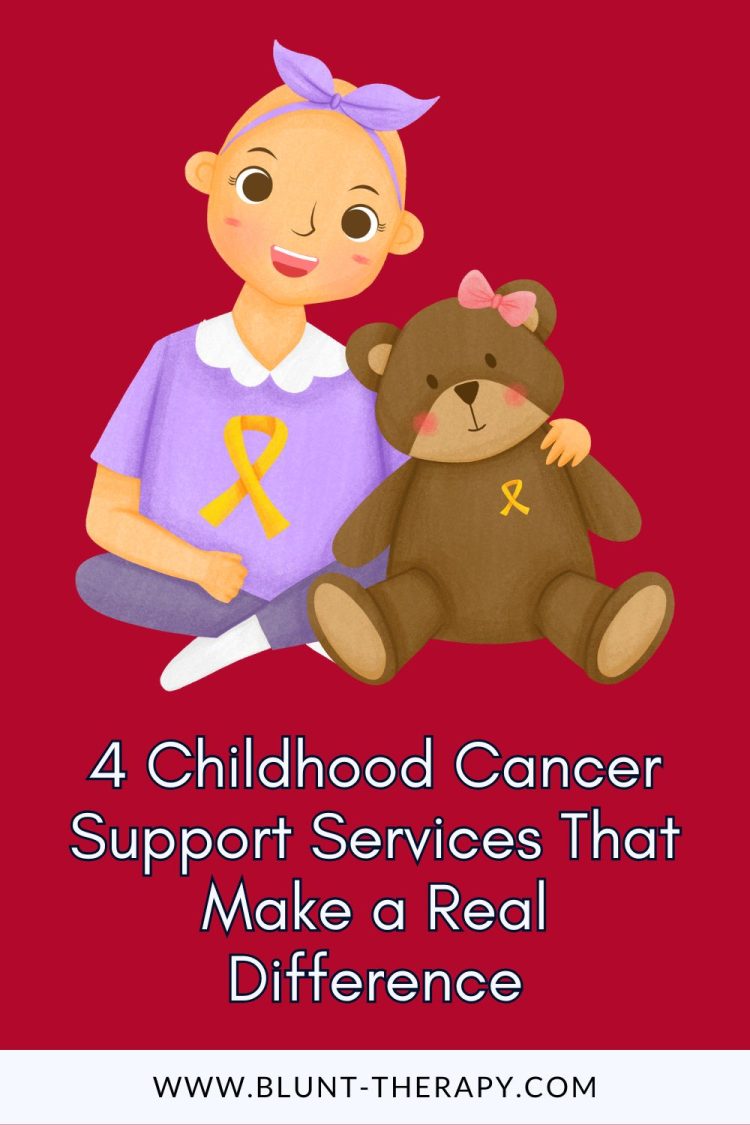
4 Types of Support Families of Children With Cancer Often Need
The help families need often extends far beyond medical treatment. Along with caring for a child with cancer, parents may face unexpected expenses, difficult decisions, disrupted routines, and the emotional strain that affects every member of the household. While each family’s experience is different, most forms of support fall into four broad categories.
1. Financial Support
Even with health insurance, childhood cancer often brings expenses that families never anticipated. Travel to specialty treatment centers, overnight lodging, meals away from home, parking fees, and medical costs not covered by insurance can quickly strain a household budget. Parents may also lose income if they reduce work hours or take extended leave to care for their child.
Many support organizations offer financial assistance that may include:
- Reimbursement for travel and lodging
- Help with meals during treatment
- Assistance with eligible medical expenses not covered by insurance
- Emergency financial assistance for qualifying families
Even modest assistance with travel, lodging, meals, or uncovered medical costs can ease financial pressure during a time when many parents are already balancing work, caregiving, and extended hospital stays.
2. Emotional Support
Childhood cancer affects the emotional well-being of the entire family. Parents often carry enormous stress while making difficult medical decisions and trying to maintain stability at home. Children receiving treatment may experience fear, loneliness, or frustration, while siblings often struggle with changes they don’t fully understand.
Support services commonly include:
- Individual and family counseling
- Parent and caregiver support groups
- Child life specialists who help children cope with treatment
- Art, music, or recreational therapy programs
- Peer support opportunities for children and parents
These services give children and parents a safe place to express fear, grief, frustration, or exhaustion without feeling responsible for protecting one another.
3. Practical Support
The logistics of childhood cancer can feel overwhelming. Parents suddenly find themselves coordinating appointments, communicating with multiple healthcare providers, understanding insurance benefits, arranging transportation, and balancing treatment with work and school responsibilities.
Practical support may include:
- Family Navigators or case managers
- Help coordinating medical appointments
- Guidance on available community resources
- Transportation assistance
- Educational support and school coordination
A Family Navigator or case manager can reduce the number of appointments, forms, phone calls, and resource searches that parents must manage on their own.
4. Support for Siblings
When one child receives a cancer diagnosis, brothers and sisters often experience fear, confusion, sadness, or even guilt. Parents naturally devote much of their attention to the child receiving treatment, leaving siblings to cope with major changes in family life.
Programs designed specifically for siblings may offer:
- Age-appropriate peer support groups
- Counseling and emotional support
- Creative arts and therapeutic activities
- Opportunities to connect with other children in similar situations
- Parent education on supporting siblings throughout treatment
Sibling support programs give children a safe place to express emotions they may hesitate to share at home because they don’t want to add to their parents’ stress or draw attention away from their brother or sister.
4 Organizations That Help Families of Children With Cancer
The organizations below address different needs, and eligibility may depend on factors such as where a child receives treatment, where a family lives, or the child’s age or diagnosis. Some families may qualify for support from more than one program, making it worthwhile to explore several options.
1. Four Diamonds
Four Diamonds helps eligible families whose children receive care through Penn State Health Children’s Hospital by covering certain medical expenses that insurance does not pay. The organization also funds a multidisciplinary team of pediatric specialists—including child life specialists, counselors, nurse coordinators, music and art therapists, a nutritionist, a pharmacist, and others—who support children and their families throughout treatment. In addition, Four Diamonds supports pediatric cancer research at Penn State Health Children’s Hospital and Penn State College of Medicine.
Best for: Eligible families receiving care through Penn State Health Children’s Hospital who need assistance with uncovered medical expenses and access to coordinated pediatric support services.
How Four Diamonds Helps
- Covers eligible medical expenses not paid by insurance
- Provides access to a multidisciplinary pediatric care team
- Offers counseling, child life services, and creative arts therapies
- Funds pediatric cancer research
By reducing some of the financial burden while expanding access to supportive care, Four Diamonds allows families to focus more of their attention on their child’s treatment and recovery.
2. Children’s Cancer Partners of the Carolinas
Traveling for specialized pediatric cancer treatment often creates financial and logistical challenges of its own. Gas, hotel stays, meals, and repeated trips to treatment centers can become significant expenses while also disrupting work schedules, childcare, and everyday family routines.
Children’s Cancer Partners of the Carolinas helps eligible families in North and South Carolina manage many of those challenges by providing assistance with treatment-related travel, lodging, and meals. The organization also connects families with Family Navigators who provide one-on-one guidance from diagnosis through treatment and survivorship.
Best for: Families in North Carolina or South Carolina who travel for pediatric cancer treatment and need both financial assistance and individualized resource coordination.
How Children’s Cancer Partners of the Carolinas Helps
- Reimburses eligible transportation expenses
- Assists with meals and overnight accommodations related to treatment
- Connects families with a dedicated Family Navigator
- Helps address medical, financial, and emotional concerns
- Hosts community events that connect families with others facing similar challenges
For many parents, having a dedicated Family Navigator means spending less time searching for resources and more time focusing on their child’s care.
3. Children’s Cancer Center
A serious illness affects every member of a family differently. While one child may struggle with fear or isolation during treatment, parents may feel emotionally exhausted, and siblings may wrestle with confusion or worry.
Children’s Cancer Center provides emotional, educational, and financial support for children with pediatric cancer or chronic blood disorders, along with programs designed to support parents, siblings, and caregivers. Services include counseling, art therapy, educational resources, family events, and support that continues from diagnosis through survivorship.
Best for: Families seeking ongoing emotional, educational, and therapeutic support for both the child receiving treatment and the rest of the household.
How Children’s Cancer Center Helps
- Offers more than 30 support programs for children and families
- Provides counseling and art therapy
- Hosts family events that encourage connection and respite
- Extends services to parents, siblings, and caregivers
- Continues support throughout treatment and survivorship
Each family member may need something different. A child may need help expressing fear, a sibling may need reassurance, and a parent may need a place to speak honestly without adding to the child’s distress.
4. SIBSPlace
When a child or parent has cancer, siblings often experience major changes in their daily lives as well. They may understand why the family’s attention has shifted while still feeling lonely, frightened, guilty, or overlooked.
SIBSPlace provides free support for children ages 5 to 17 who have a sibling with cancer or another serious medical illness, as well as children who have a parent with cancer. Mental health professionals lead age-based peer groups that use conversation, expressive arts, and other therapeutic activities to help children identify emotions, connect with peers, and develop healthy coping skills.
Best for: Children ages 5 to 17 who need support while coping with the serious illness of a sibling or parent.
How SIBSPlace Helps
- Provides free, sibling-centered support
- Offers age-based peer groups led by mental health professionals
- Uses discussion and creative arts to help children express difficult emotions
- Helps participants develop healthy coping skills
- Offers homework assistance and support groups for parents
Programs like SIBSPlace remind siblings that their thoughts, fears, and experiences matter too, even when another family member requires urgent medical care.
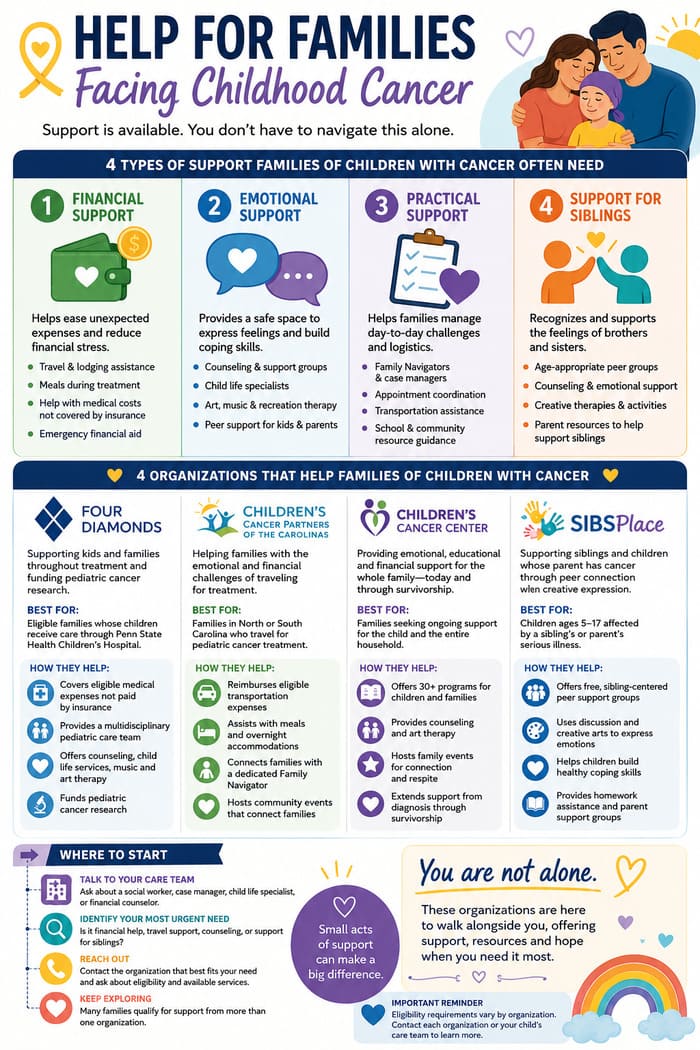
Childhood Cancer Support Services at a Glance
Every family’s situation is different, and many families qualify for support from more than one organization. This comparison highlights each organization’s primary focus so you can quickly identify which resources may best fit your family’s needs.
| Organization | Best For | Primary Types of Support |
| Four Diamonds | Eligible families whose children receive care through Penn State Health Children’s Hospital | Assistance with eligible medical expenses, multidisciplinary pediatric care team, counseling, child life services, music and art therapy, pediatric cancer research |
| Children’s Cancer Partners of the Carolinas | Families in North or South Carolina who travel for pediatric cancer treatment | Travel reimbursement, lodging and meal assistance, Family Navigator support, resource coordination, community connections |
| Children’s Cancer Center | Families seeking ongoing support for both the child receiving treatment and the rest of the household | Counseling, art therapy, educational programs, family events, long-term support from diagnosis through survivorship |
| SIBSPlace | Children ages 5–17 affected by a sibling’s or parent’s serious illness | Peer support groups, emotional support, expressive arts, coping skills, homework assistance, parent resources |
Frequently Asked Questions About Childhood Cancer Support Services
1. Where should families look for support first?
Start with your child’s treatment center. Ask whether a social worker, case manager, child life specialist, or financial counselor is available. These professionals often know which local and national programs best fit your child’s diagnosis, treatment location, insurance coverage, and immediate needs. They can also help you identify organizations that match your family’s circumstances.
2. Can families receive help from more than one organization?
Often, yes. Many organizations focus on different types of assistance, so families may qualify for support from multiple programs at the same time. For example, one organization may help with travel expenses while another provides counseling, sibling support, or assistance with eligible medical costs. Each organization has its own eligibility requirements, so it’s worth exploring several options.
3. Do these organizations support parents and siblings as well as the child receiving treatment?
Some do, but the services vary. While certain organizations focus primarily on the child receiving treatment, others offer counseling, family activities, educational programs, parent support, and services designed specifically for siblings. If support for the entire family is important to you, ask each organization which services are available for parents and brothers or sisters.
4. How do I know whether my family qualifies for assistance?
Eligibility requirements differ from one organization to another. Factors may include your child’s diagnosis, age, where treatment is provided, where you live, or your family’s financial circumstances. Contact the organization directly or ask a member of your child’s healthcare team to help you determine which programs may be a good fit.
Final Thoughts
No parent expects to navigate childhood cancer, and no family should feel as though they have to identify every resource on their own. While medical treatment rightly becomes the immediate priority, practical challenges often follow close behind. Travel expenses, missed work, emotional strain, and the needs of siblings can quickly become overwhelming without additional support.
A good place to begin is your child’s treatment center. Ask whether a social worker, case manager, child life specialist, or financial counselor is available to help identify resources that fit your family’s situation. From there, focus on the need that feels most urgent—whether that’s financial assistance, travel support, counseling, or services for siblings—and connect with the organization best equipped to help.
No organization can remove the uncertainty that comes with a childhood cancer diagnosis. What they can do is ease some of the burdens that surround it. Help with a hotel stay, guidance from a Family Navigator, counseling for a sibling, or assistance with medical expenses may not change the diagnosis, but it can make day-to-day life more manageable during an extraordinarily difficult time. That support allows families to devote more of their time, energy, and attention to what matters most: caring for their child.


![The Complete Guide To Online Therapy With BetterHelp [updated for 2021]](https://www.blunt-therapy.com/wp-content/uploads/The-Complete-Guide-To-Online-Therapy-With-BetterHelp-updated-for-2021.jpg)