
Table of Contents
Affiliate link notice: As an affiliate of BetterHelp and other third-party vendors, we may receive compensation if you make a purchase using the links provided on this page. For more information, visit our disclosure page.
Last Updated on August 30, 2026 by Randy Withers
Imagine visiting your doctor for chest pain and paying a routine copay, only to discover that seeing a psychologist for anxiety requires additional approvals, higher out-of-pocket costs, or stricter coverage rules. For years, disparities like these made it more difficult for many people to access mental health care, even when they carried comprehensive health insurance.
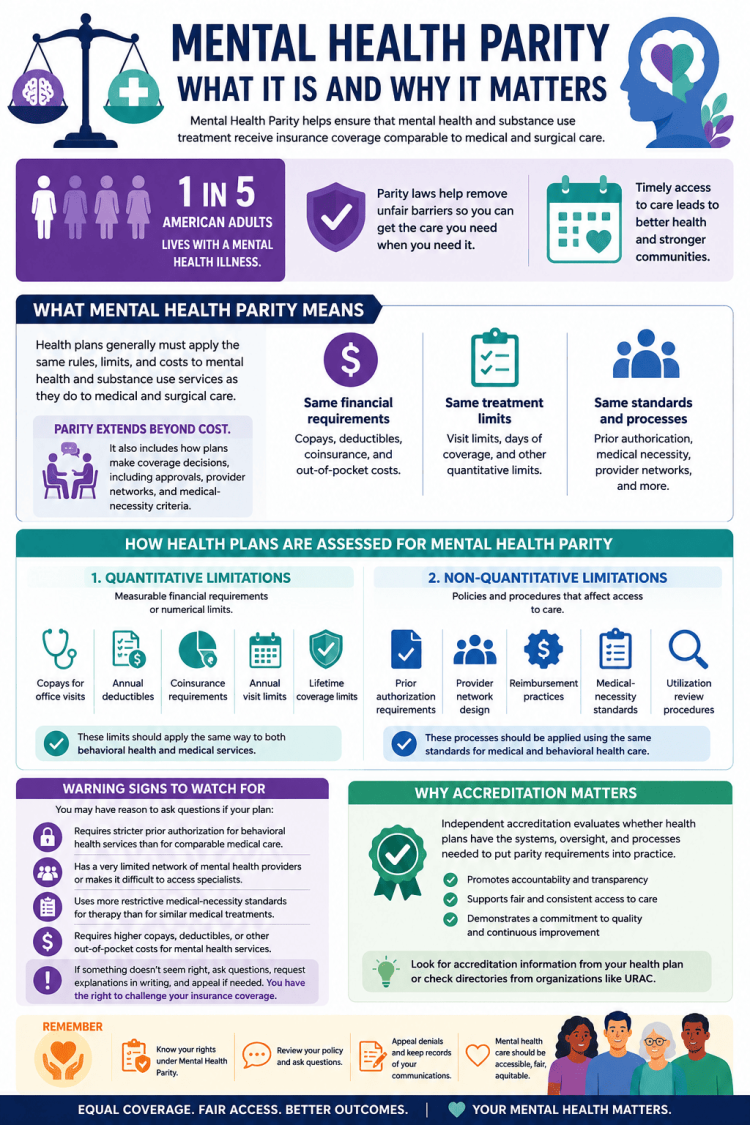
Mental Health Parity is the principle that mental health and substance use treatment should receive insurance coverage comparable to medical and surgical care. In other words, your health plan generally should not impose greater financial burdens or more restrictive treatment requirements simply because you are seeking care for depression, anxiety, addiction, or another behavioral health condition.
These protections matter because one in five American adults lives with a mental health illness, and millions rely on health insurance to access therapy, psychiatric care, medication, and other behavioral health services. When coverage creates unnecessary barriers, people may postpone treatment, discontinue care, or avoid seeking help altogether.
What Is Mental Health Parity?
Mental Health Parity exists to help ensure that people seeking treatment for mental health conditions or substance use disorders receive insurance benefits comparable to those provided for medical and surgical care. Before federal parity protections, many health plans imposed higher copays, stricter visit limits, or additional requirements for behavioral health services that did not apply to treatment for physical illnesses. These differences often discouraged people from seeking care or continuing treatment.
Today, Equal treatment of mental health services and physical care providers means insurance plans must apply the same limitations and financial requirements across the board. While Mental Health Parity does not require every service to be covered, it generally requires insurers to evaluate behavioral health benefits using standards comparable to those applied to medical and surgical care.
Mental Health Parity extends beyond the amount you pay for treatment. It also governs how health plans make coverage decisions, including approval requirements, provider networks, and medical-necessity criteria. Understanding these protections can help you recognize when your health plan is treating behavioral health benefits fairly and when additional questions may be warranted.
Why Accreditation Matters
Federal law requires most health plans to provide comparable coverage for behavioral health and medical care, but legal requirements alone cannot guarantee consistent implementation. Health plans must also demonstrate that they apply those standards fairly in everyday practice.
Independent accreditation helps answer an important question: Are health plans actually putting Mental Health Parity requirements into practice? Rather than enforcing laws or resolving individual coverage disputes, accrediting organizations evaluate whether health plans have the systems, documentation, oversight, and internal processes needed to support fair and consistent implementation of parity requirements.
One organization that performs this work is URAC, an independent, nonprofit organization with more than 35 years of experience developing evidence-based accreditation programs across the healthcare industry. Its accreditation standards are developed with input from healthcare professionals and national advisory groups, allowing health plans to demonstrate their commitment to promoting fair access to behavioral health services alongside medical care. Voluntarily earning accreditation also signals a commitment to accountability, transparency, and continuous quality improvement.
How Health Plans Are Assessed for Mental Health Parity
Equal treatment of mental health services and physical care providers means insurance plans must apply the same limitations and financial requirements across the board. Most Mental Health Parity reviews focus on two broad categories of treatment limitations: quantitative and non-quantitative. Understanding the difference makes it easier to recognize whether behavioral health benefits receive treatment comparable to medical care.
Quantitative Treatment Limitations
Quantitative treatment limitations are measurable financial requirements or numerical limits that are easy to compare across benefits. Mental Health Parity generally requires these limitations to apply comparably to both behavioral health and medical services. Common examples include:
- Copays for office visits
- Annual deductibles
- Coinsurance requirements
- Annual visit limits
- Lifetime coverage limits
For example, if your primary care physician visit requires a routine copay, similar standards should generally apply to a therapy appointment or psychiatric visit.
Non-Quantitative Treatment Limitations
Non-quantitative treatment limitations involve policies and administrative procedures rather than dollar amounts. Common examples include:
- Prior authorization requirements
- Provider network design
- Reimbursement practices
- Utilization review procedures
Mental Health Parity applies to these administrative processes just as it does to financial requirements. Health plans should use comparable standards when reviewing behavioral health and medical benefits, helping ensure that mental health treatment is not subject to more restrictive requirements than similar medical care.
Parity rules can make a plan’s behavioral health coverage look equivalent on paper while the practical experience of using it still stalls at network directories that are out of date or providers who aren’t accepting new patients.
Rula is a behavioral health platform built to close that gap by connecting people to in-network therapy and psychiatry through their existing insurance, with a nationwide network of more than 22,000 licensed providers and next-day availability in many cases.
When someone starts with Rula, the platform verifies insurance coverage upfront and matches based on submitted preferences, including gender, age range, identity, religion, and language spoken, alongside availability and clinical fit. Therapy and psychiatry, including medication management, sit under one roof, so a patient who needs both isn’t rebuilding their care team from scratch.
Parity protections matter most at the moment a person tries to use them. Verifying coverage, seeing an estimated cost, and getting on a provider’s schedule quickly is what turns a legal right into actual treatment.
When Mental Health Parity Falls Short
Although Mental Health Parity laws provide important protections, coverage disputes and inconsistencies can still occur. No system is perfect, so it’s important to recognize the signs that your health plan may not be applying parity requirements fairly.
You may have reason to ask additional questions if your health plan:
- Requires stricter prior authorization for behavioral health services than for comparable medical care.
- Has a very limited network of mental health providers or makes it difficult to access behavioral health specialists.
- Uses more restrictive medical-necessity standards for therapy than it applies to similar medical treatments.
- Requires higher copays, deductibles, or other out-of-pocket costs for mental health services than for comparable medical care.
If you believe your health plan is not complying with Mental Health Parity requirements, begin by reviewing your Explanation of Benefits (EOB) and asking your insurer why coverage was denied or restricted. If the explanation remains unclear, you can file an internal appeal and, if necessary, request an independent external review. Keep records of your communications throughout the process, including dates, names, and summaries of your conversations.
Most importantly, you have the right to challenge your insurance coverage when you believe parity requirements have not been applied fairly.
Final Thoughts
Mental Health Parity exists to help ensure that behavioral health receives the same consideration as physical health when insurance coverage decisions are made. Understanding these protections can help you make informed decisions about your healthcare, recognize potential coverage concerns, and advocate for fair treatment when questions arise.
Independent accreditation supports that goal by evaluating whether health plans have the policies and oversight needed to apply parity requirements consistently. While accreditation does not replace government oversight, it provides an additional measure of accountability and transparency for health plans that choose to participate.
If something about your coverage doesn’t seem right, ask questions. Review your policy, request an explanation, and appeal decisions when appropriate. Mental health treatment should not be harder to access simply because the condition is behavioral rather than physical. Understanding your rights under Mental Health Parity can help you advocate for the coverage you’ve earned.
Frequently Asked Questions About Mental Health Parity
Does Mental Health Parity mean therapy is free?
No. Mental Health Parity does not eliminate out-of-pocket costs. Instead, it generally requires that deductibles, copays, coinsurance, and other financial requirements for behavioral health services be comparable to those applied to similar medical and surgical care. You may still be responsible for certain costs, but those costs should be structured fairly.
How can I tell whether my health plan is accredited?
You can ask your insurance company whether it has earned accreditation for Mental Health Parity or related healthcare standards. Organizations such as URAC maintain directories of accredited organizations, and many health plans also identify their accreditation status on their websites or in member materials.
Can I appeal a denial of mental health treatment?
Yes. Most health plans provide an internal appeals process, and many also offer an independent external review if you disagree with the outcome. If you believe your plan has not applied Mental Health Parity requirements fairly, reviewing your policy documents, requesting a written explanation, and keeping records of your communications can strengthen your appeal.
Does Mental Health Parity guarantee that every mental health service is covered?
No. Mental Health Parity generally requires comparable coverage—not unlimited coverage. Health plans may still determine medical necessity, require prior authorization when appropriate, or exclude certain services, provided they apply similar standards to comparable medical and behavioral health benefits.