Table of Contents
Affiliate link notice: As an affiliate of BetterHelp and other third-party vendors, we may receive compensation if you make a purchase using the links provided on this page. For more information, visit our disclosure page.
Last Updated on January 19, 2026 by Randy Withers
Weight loss is often framed as a matter of discipline, planning, or finding the right tool. Eat better. Move more. Stick with it. And yet, many people do all of those things and still find themselves stuck in the same frustrating cycle—losing weight, regaining it, and blaming themselves for a lack of willpower.
What’s frequently missing from that conversation is emotional eating. Not the occasional stress snack, but the deeper pattern of using food to regulate mood, manage discomfort, numb stress, or cope with emotions that feel overwhelming or unresolved. When emotional eating is driving behavior, no meal plan, medication, or exercise routine can fully do its job on its own.
This is why weight loss efforts often fail even when the tools are objectively sound. The issue isn’t a lack of knowledge. It’s that food has quietly taken on a psychological role it was never meant to fill. Until that role is addressed, progress tends to stall—or unravel the moment motivation dips or life gets difficult.
Treating emotional eating doesn’t mean moralizing food or pathologizing coping. It means understanding why eating has become the go-to strategy for comfort, relief, or control—and learning how to meet those underlying needs in healthier, more sustainable ways. When that work happens, weight loss stops feeling like a constant battle and starts to stabilize.
In this article, we’ll look at five ways addressing the root causes of emotional eating supports sustainable weight loss. Each point reflects a psychological shift that makes change more durable—not by relying on willpower, but by changing the conditions that drive behavior in the first place.
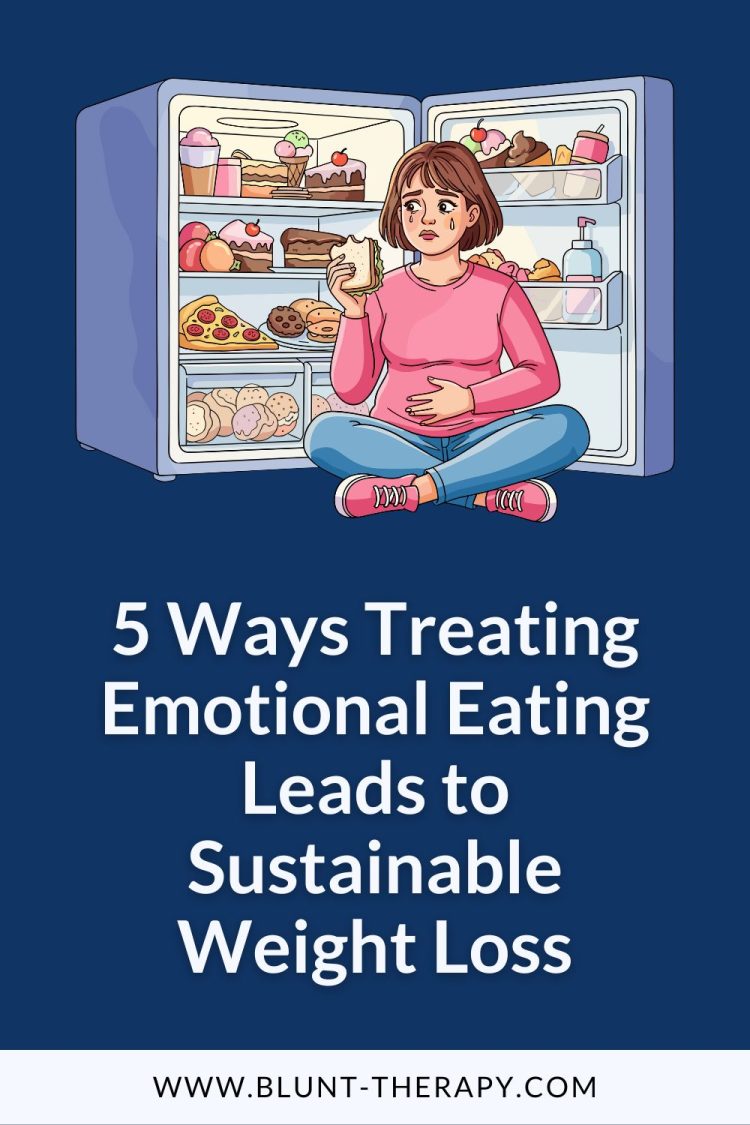
Emotional Eating: Why Addressing It Matters
Most weight loss plans focus on what to eat, when to eat, and how much to eat. Far fewer address why eating happens in the first place. When food is being used to cope with stress, loneliness, boredom, shame, or emotional overload, nutritional advice alone rarely holds up for long.
This is where emotional eating quietly undermines progress. The behavior isn’t random, and it isn’t a failure of motivation. It’s often a learned strategy for managing internal states that feel uncomfortable, intense, or out of control. In clinical work, this pattern shows up repeatedly among clients who “know what to do” but struggle to follow through when emotions take over.
Treating emotional eating shifts the focus from short-term compliance to long-term change. Instead of asking, “Why can’t I stick to this?” the work becomes, “What is food doing for me emotionally, and what would actually help instead?” The five areas below reflect some of the most common psychological shifts that make sustainable weight loss possible.

1. Emotional Eating Is Often a Regulation Strategy, Not a Lack of Discipline
For many people, emotional eating isn’t about hunger at all. It’s about relief. Food becomes a fast, reliable way to soothe anxiety, dampen stress, distract from difficult emotions, or provide comfort when support feels unavailable. Over time, the brain learns that eating works—and the habit becomes automatic.
This is why simply telling yourself to “stop” rarely works. When food is serving as a regulation tool, removing it without replacing that function leaves a gap. The urge doesn’t disappear; it just looks for another opening. This is also why emotional eating often intensifies during periods of stress, fatigue, or emotional vulnerability.
Understanding emotional eating as a coping strategy—not a character flaw—changes the entire approach to weight loss. The goal isn’t to eliminate comfort, but to expand the ways comfort and regulation are achieved. When people learn to recognize the emotional triggers behind eating urges and respond differently, food gradually loses its grip as the primary coping mechanism.
Weight loss becomes less about fighting urges and more about meeting needs directly. As emotional eating becomes less necessary, consistency improves—not because of increased discipline, but because the behavior itself is no longer doing so much psychological work.
2. Skills Matter More Than Willpower When Emotional Eating Takes Over
One of the biggest misconceptions about emotional eating is that it can be solved with more resolve. In reality, willpower is a fragile tool—especially under stress. When emotions run high, relying on self-control alone often backfires.
This is where learning concrete skills becomes essential. Approaches such as dialectical behavior therapy emphasize practical strategies for distress tolerance and emotional regulation. Rather than suppressing urges or pushing through discomfort, people learn how to stay present with difficult emotions without immediately acting on them.
For someone struggling with emotional eating, this can be a turning point. Instead of food being the only available option when emotions spike, there are alternatives—ways to pause, ground, or redirect that don’t rely on shame or deprivation. Over time, urges tend to lose intensity because emotions are no longer overwhelming.
Sustainable weight loss depends far more on skills than effort. Skills hold up under pressure. Willpower rarely does.

3. Changing the Thought Patterns That Fuel Emotional Eating
Emotional eating is rarely driven by feelings alone. It is also reinforced by the way people think about themselves, their bodies, and perceived failures. Thoughts like “I’ve already blown today,” “I’ll never get this right,” or “Eating is the only thing that helps” quietly strengthen the cycle.
Work grounded in cognitive behavioral therapy (CBT) helps bring these patterns into focus. By identifying and challenging rigid, self-critical thinking, people can reduce the emotional intensity that makes urges feel urgent and uncontrollable.
This isn’t about positive thinking. It’s about accuracy. As thoughts become more balanced and less punitive, emotional reactions soften. Eating decisions follow suit—not because of pressure, but because the internal narrative has changed.
When thinking becomes more flexible, emotional eating loses much of its momentum, and weight loss becomes more sustainable over time.
4. Redesigning the Environment Reduces Emotional Eating Triggers
Many people underestimate how strongly their environment influences eating behavior. Stress cues, routines, food availability, and daily structure all shape decisions—often outside conscious awareness.
Strategies based on stimulus control focus on modifying the environment rather than relying on constant self-monitoring. This might involve changing food visibility, interrupting routines that reliably trigger emotional eating, or creating intentional pauses between urges and action.
The goal is not perfection. It is reduction of friction. When triggers are less frequent or less intense, people don’t have to work as hard to make aligned choices.
For long-term weight loss, this matters. Motivation fluctuates. Environments endure.
5. Medication Works Best When Emotional Eating Is Addressed Directly
Medications can be helpful tools for weight loss, particularly when appetite regulation or metabolic factors are involved. However, when emotional eating remains unaddressed, medication alone often fails to deliver lasting results.
Different semaglutide formats can reduce hunger and support portion control, but they do not resolve emotional drivers. Stress, boredom, loneliness, and emotional discomfort can still push eating behavior—sometimes leading people to eat past fullness or struggle once medication is stopped.
When emotional eating is treated alongside medication, outcomes tend to improve. Therapy helps clarify whether eating is driven by hunger, habit, or emotion and builds alternative coping strategies when food is no longer as reinforcing.
Medication works best when it supports psychological change, not when it is expected to replace it.
Why Sustainable Change Depends on More Than One Fix
Emotional eating rarely has a single cause. It’s usually a system—thoughts, emotions, habits, environment, and coping strategies reinforcing one another over time.
That’s why addressing only one piece often leads to partial or temporary progress. Insight without skills collapses under stress. Skills without environmental support require constant effort. Medication without psychological work leaves emotional patterns intact.
When these pieces work together, change becomes more resilient. Progress may still be uneven, but setbacks feel less like failure and more like information. Stability replaces constant vigilance.
This approach doesn’t promise ease. It offers durability.
Final Thoughts
Treating emotional eating is not about controlling food more aggressively. It’s about understanding why food became such an important emotional resource—and expanding the ways those needs are met.
Sustainable weight loss rarely comes from force. It comes from alignment. When eating choices are supported by emotional regulation, flexible thinking, realistic environments, and appropriate tools, the internal tug-of-war begins to quiet.
For therapy clients, this work can be uncomfortable precisely because it works. It replaces shame with understanding and effort with strategy. For clinicians, it reinforces a familiar truth: lasting change happens when behavior is treated in context, not isolation.
Addressing emotional eating doesn’t guarantee a straight line. But it does create conditions where progress is far more likely to hold.