Table of Contents
Affiliate link notice: As an affiliate of BetterHelp and other third-party vendors, we may receive compensation if you make a purchase using the links provided on this page. For more information, visit our disclosure page.
Last Updated on October 19, 2026 by Randy Withers
Most people don’t realize how easy it is to choose the wrong addiction treatment center until they’re already in it.
At first glance, many programs look similar. Clean websites. Reassuring language. Repeated references to “personalized care” and “evidence-based treatment.” After a while, it starts to blur together—and that’s part of the problem. When every option presents itself as the right one, it becomes difficult to distinguish between programs that are clinically sound and those that are simply well marketed.
The consequences of that distinction are not minor. Choosing a program that does not match a person’s clinical needs can disrupt progress, delay stabilization, and, in some cases, increase the likelihood of relapse. It’s not just a matter of preference—it’s a matter of fit.
Addiction recovery is not something that responds well to improvisation. It requires consistency, clinical oversight, and a plan that extends beyond the initial phase of treatment. In most cases, it usually needs structure—not only during care, but afterward, when support becomes less immediate and more self-directed.
The goal is not to identify the most appealing option on the surface. It is to find an addiction treatment center that aligns with the level of need, supports co-occurring mental health conditions when present, and provides a realistic path forward once formal treatment ends.
This article takes a practical approach to that process. First, what actually matters when evaluating an addiction treatment center. Then, several examples of programs that reflect those standards in real-world settings.
What Is an Addiction Treatment Center?
An addiction treatment center is a structured clinical environment designed to help individuals stabilize, understand, and begin to change patterns related to substance use. That sounds straightforward, but in practice, these centers vary widely in what they offer, how they operate, and the level of care they provide. Some function as short-term stabilization settings, while others provide longer, more comprehensive treatment that addresses both substance use and underlying mental health conditions.
At a minimum, a legitimate addiction treatment center should provide some combination of medical oversight, therapeutic intervention, and recovery planning. This often includes individual therapy, group therapy, and, when appropriate, medication support. For individuals with more severe dependence, particularly when withdrawal is a concern, programs may begin with medically supervised detox. Others may focus on outpatient care, where treatment is integrated into a person’s daily life rather than requiring full-time residence.
Most effective programs are built around levels of care that reflect clinical need. A person may start in a higher level of support—such as inpatient or residential treatment—and gradually transition to less intensive services over time. That progression matters. Recovery is rarely linear, and the ability to adjust intensity without losing continuity is one of the defining features of a well-structured program.
It is also important to recognize that addiction treatment does not occur in isolation. Many individuals entering care are also managing anxiety, depression, trauma, or other co-occurring conditions. A center that cannot address both substance use and mental health in an integrated way is often limited in what it can realistically accomplish. For that reason, the question is not simply whether a program offers treatment, but how complete that treatment actually is.
What to Look for in an Addiction Treatment Center
Once you understand what an addiction treatment center is designed to do, the next step is figuring out how to evaluate one in practical terms. Most programs will present themselves well. That’s expected. The difference shows up in the details—how clearly they explain their approach, how structured their care actually is, and whether their model holds up beyond the initial phase of treatment.
A few core elements tend to separate programs that are clinically sound from those that are primarily presentation-driven.
1. Clear, Evidence-Based Treatment (Not Just Language That Sounds Good)
Most centers will reference evidence-based care. That alone is not enough.
What matters is whether they can explain, in plain terms, what that actually looks like. Which therapies are used? How often are sessions scheduled? Is there a meaningful balance between individual work, group work, and family involvement? If those answers are vague or overly generalized, it becomes difficult to understand what the program is truly offering.
There should also be a clear capacity to address co-occurring mental health conditions. In practice, substance use rarely exists in isolation. Programs that treat addiction without addressing anxiety, depression, or trauma tend to see less stable outcomes over time.
A strong program will also connect its clinical work to what happens after discharge. Recovery does not end when treatment does. It usually needs structure, and that structure should extend beyond the program itself.
2. A Level of Care That Matches Clinical Need
Not every situation requires the same level of intervention. Matching intensity to need is one of the most important parts of effective treatment.
Some individuals will need detox when withdrawal risk is present. Others may require residential care to create a stable, contained environment. For many, structured outpatient care—such as partial hospitalization or intensive outpatient—offers a balance between support and daily responsibility.
The key is not which level of care sounds most appealing, but which one fits the current clinical picture. A program that applies the same model to everyone is often prioritizing simplicity over accuracy.
Programs that offer a continuum of care tend to be more adaptable. The ability to step down gradually—from higher to lower levels of support—helps maintain momentum and reduces the likelihood of abrupt transitions that can destabilize progress.
3. Thoughtful Use of Medication When Appropriate
Medication is sometimes part of addiction treatment, particularly for opioid and alcohol use disorders. It can be part of treatment, but it should be integrated into a broader clinical plan rather than used in isolation.
A credible program will be able to explain how medication fits into its overall approach. This includes how medications are selected, how side effects are monitored, and how medication support is coordinated with therapy and behavioral interventions.
Equally important is how the conversation is handled. Medication should not be framed as a shortcut or a substitute for treatment. It is better understood as a stabilizing component—something that can support engagement, reduce risk, and improve the likelihood of follow-through.
It should be noted though that some medications invite new problems. For example, increased anxiety from Adderall use, whether prescribed or not. As always, make informed decisions with the help of your doctor.
4. Accreditation, Transparency, and Clinical Oversight
At a baseline, an addiction treatment center should be able to demonstrate that it operates within established clinical standards. Accreditation from organizations such as The Joint Commission or CARF is one indicator that a program has undergone external review.
Beyond that, transparency matters. Who is providing care? Are therapists licensed? Is medical staff available, and if so, at what level? If a program cannot clearly explain who is responsible for treatment and how care is delivered, that uncertainty becomes a concern.
Treatment is not a casual service—it is a clinical process. Programs that communicate clearly about their staff, structure, and expectations tend to be more reliable than those that rely on general assurances.
5 Examples of Addiction Treatment Centers Done Right
Once you have a clear sense of what to look for, the next step is applying that framework to real programs. No center is identical, and no single model works for everyone. What matters is whether a program demonstrates consistency, clinical clarity, and a structure that supports both treatment and follow-through.
The examples below reflect programs that, based on publicly available information, align with those principles. As with any decision of this kind, it is still important to verify details directly and ask questions specific to your situation.
1. Gateway Foundation
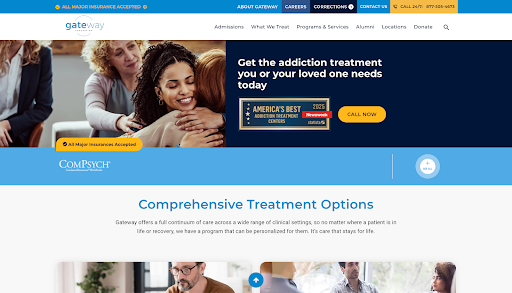
If you’re considering addiction treatment in Illinois, Gateway Foundation is often one of the first names that comes up—and for good reason. The organization has a long-standing presence in the region and offers multiple levels of care, which allows for more flexibility depending on clinical need.
One of the more notable aspects of Gateway Foundation is its integration of medical and therapeutic services. Medication-assisted approaches, including options like Suboxone or Vivitrol, are available when appropriate and are incorporated into a broader treatment plan rather than treated as stand-alone solutions.
The structure is consistent with what many people need in early recovery: clear expectations, clinical oversight, and a pathway that extends beyond initial treatment. For individuals managing both substance use and mental health concerns, that integrated model can provide a more stable foundation.
2. Rosecrance
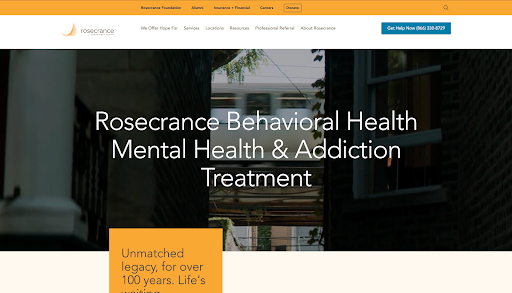
Rosecrance offers a wide range of services across multiple locations, which often translates to more individualized pathways through treatment. That flexibility can be particularly useful when needs change over time.
A defining strength of Rosecrance is its ability to support transitions between levels of care. Someone may begin in a more structured setting and move into outpatient services without losing continuity. That step-down approach helps reduce the abruptness that can occur when treatment ends too quickly or without adequate support.
From an evaluation standpoint, this reflects a program that prioritizes progression rather than isolated phases of care—an important distinction for long-term outcomes.
3. Haymarket Center
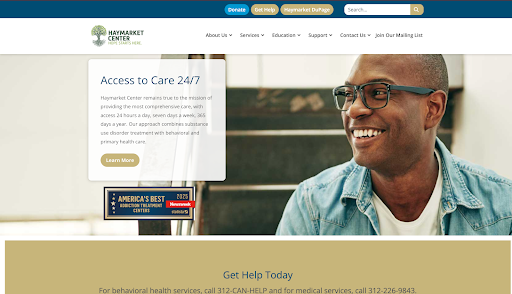
For those seeking a more straightforward, established option in an urban setting, Haymarket Center presents a different kind of appeal. Based in Chicago, it has been operating for decades and tends to focus less on presentation and more on service delivery.
Programs like this are often easier to assess because they are more transparent about what they offer. The emphasis is typically on access, continuity, and meeting people where they are rather than creating a highly curated treatment experience.
When evaluating a center like Haymarket, the same principles apply: clarity around levels of care, support for co-occurring conditions, and a defined approach to discharge planning. In many cases, its longevity reflects a model that has remained functional over time.
4. Hazelden Betty Ford
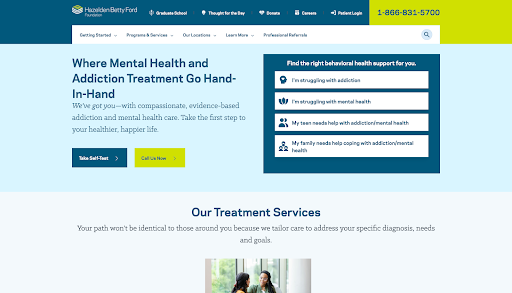
Hazelden Betty Ford is one of the more widely recognized names in addiction treatment, and its outpatient presence in Chicago provides an option for individuals who need structured care while maintaining daily responsibilities.
Outpatient models can be particularly valuable for those balancing work, family, or other obligations. The key is ensuring that the level of intensity is sufficient. Programs like this tend to offer a combination of individual therapy, group sessions, and ongoing recovery support, allowing for consistency without requiring full-time residence.
As with any outpatient setting, the effectiveness depends on engagement and fit, but the structure itself can be a strong option when residential care is not feasible.
5. Rogers Behavioral Health
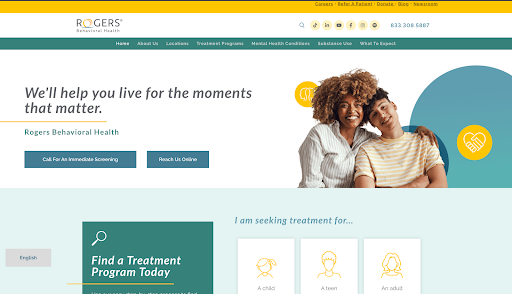
For individuals in northern Illinois, Rogers Behavioral Health is often considered for structured outpatient care, particularly at the partial hospitalization or intensive outpatient level.
Programs at this level provide a higher degree of structure than standard outpatient care while still allowing individuals to live at home. That can be useful when more support is needed, but full residential treatment is not indicated.
As always, services can vary by location, so confirming program specifics is essential. Still, the model itself reflects a level of care that fills an important gap between minimal support and full-time treatment.
Frequently Asked Questions
1. How do I determine which addiction treatment center is right for me?
Start with your current situation, not the program’s reputation. The most important factors are clinical need, level of care, and whether the program can realistically support you both during treatment and afterward. If withdrawal is a concern, medical detox may be necessary. If stability is an issue, a more structured setting may be appropriate.
It’s often helpful to speak directly with a clinician or intake coordinator and ask specific questions about how they would approach your case. If the answers are clear, individualized, and clinically grounded, that’s a good sign. If they feel vague or overly generalized, it may not be the right fit.
2. How long does addiction treatment usually last?
There is no single timeline that applies to everyone. Detox may last several days, residential treatment often spans a few weeks, and outpatient care can continue for several months or longer.
The more important question is whether the program allows for adjustment over time. Treatment is rarely linear, and the ability to move between levels of care—rather than ending abruptly—is often what supports longer-term stability.
3. Do I need inpatient treatment, or is outpatient enough?
That depends on the severity of the situation and the level of support available outside of treatment. Inpatient or residential care can be helpful when structure, safety, and distance from daily stressors are needed. Outpatient care may be appropriate when you can maintain stability while still engaging in treatment.
In many cases, people use both—starting with a higher level of care and then stepping down into outpatient services over time.
4. Is medication used in addiction treatment?
In some cases, yes. Medication can be part of treatment, particularly for opioid and alcohol use disorders. When used appropriately, it is typically combined with therapy and other forms of support rather than used on its own.
A quality program should be able to explain how medication fits into the overall plan, how it is monitored, and how it supports long-term recovery rather than replacing it.
5. What should I ask when contacting an addiction treatment center?
Focus on clarity and structure. Ask about levels of care, how treatment plans are developed, how co-occurring mental health conditions are addressed, and what support looks like after discharge. You can also ask who provides care and what their credentials are.
The goal is not to ask as many questions as possible, but to understand how the program actually works. Clear, direct answers are usually a sign that the program is well organized and clinically grounded.
Final Thoughts
Choosing an addiction treatment center is not about finding a place that sounds reassuring—it is about finding one that holds up under scrutiny.
Most programs will present themselves well. That is expected. The difference is whether the structure behind that presentation is actually capable of supporting change. Clear clinical models, appropriate levels of care, integrated mental health support, and a realistic plan for what happens after discharge—those are the elements that tend to matter over time.
There is also a practical reality that is easy to overlook. The “right” addiction treatment center is not necessarily the most well-known or the most polished. It is the one that fits the current situation, supports consistency, and makes follow-through possible once the initial phase of treatment ends.
If you are in the process of evaluating options, the next step is straightforward. Narrow the list. Reach out directly. Ask specific questions about structure, staffing, levels of care, and what support looks like after discharge. The quality of those answers will tell you more than any website can.
If one of the programs listed here aligns with what you are looking for, it may be worth taking that next step and having a direct conversation. A brief call can often clarify whether a program is a reasonable fit.
The goal is not to make a perfect decision. It is to make a sound one—one that gives you a realistic chance to begin, continue, and sustain recovery.