
Table of Contents
Affiliate link notice: As an affiliate of BetterHelp and other third-party vendors, we may receive compensation if you make a purchase using the links provided on this page. For more information, visit our disclosure page.
Last Updated on May 29, 2026 by Randy Withers
Few experiences are more frightening for a parent than watching their child struggle and not knowing what to do next.
Maybe your teen has withdrawn from friends and family, stopped attending school, experienced repeated emotional crises, or continued to decline despite therapy, medication, and other interventions. At some point, many parents begin asking a difficult question: Does my child need more support than outpatient treatment can provide?
For many adolescents, the answer is no. Weekly therapy, family support, school accommodations, and appropriate psychiatric care are often highly effective. However, some teens continue to struggle despite these efforts. Safety concerns may emerge, daily functioning may deteriorate, or mental health symptoms may become increasingly difficult to manage at home.
When this happens, families may begin exploring residential treatment centers for teens. These programs provide structured, intensive care designed for adolescents who need more support than outpatient services can offer. Understanding when residential treatment may be appropriate can help families make informed decisions before a difficult situation becomes a crisis.
This guide explains what residential treatment involves, the warning signs that may indicate a higher level of support is needed, and several residential treatment centers for teens that families may wish to consider.
What Is Residential Treatment?
When parents first hear the term “residential treatment,” they often picture a psychiatric hospital or a last-resort intervention. In reality, residential treatment is a structured therapeutic environment where teens live temporarily while receiving intensive mental health, behavioral health, or substance use treatment.
Residential treatment programs typically combine individual therapy, group therapy, family therapy, psychiatric care, medication management when appropriate, academic support, recreational activities, and life-skills development. Many also incorporate experiential approaches such as art, music, recreation, or outdoor programming.
Residential treatment exists on a continuum of care. Outpatient therapy generally involves one or two sessions per week. Intensive Outpatient Programs (IOPs) and Partial Hospitalization Programs (PHPs) provide more frequent treatment while allowing teens to remain at home. Psychiatric hospitalization focuses primarily on crisis stabilization and safety. Residential treatment falls between these levels of care by providing intensive therapeutic support within a structured living environment.
Many parents worry that considering residential treatment means they have somehow failed their child. In reality, seeking additional support often reflects the opposite. It means recognizing when a teenager’s needs exceed what can reasonably be addressed through outpatient services alone and taking steps to ensure they receive appropriate care.
Residential treatment is not punishment, nor is it reserved only for psychiatric emergencies. It is one option that may be appropriate when symptoms become severe, functioning deteriorates, or repeated attempts at lower levels of care have not produced meaningful improvement.
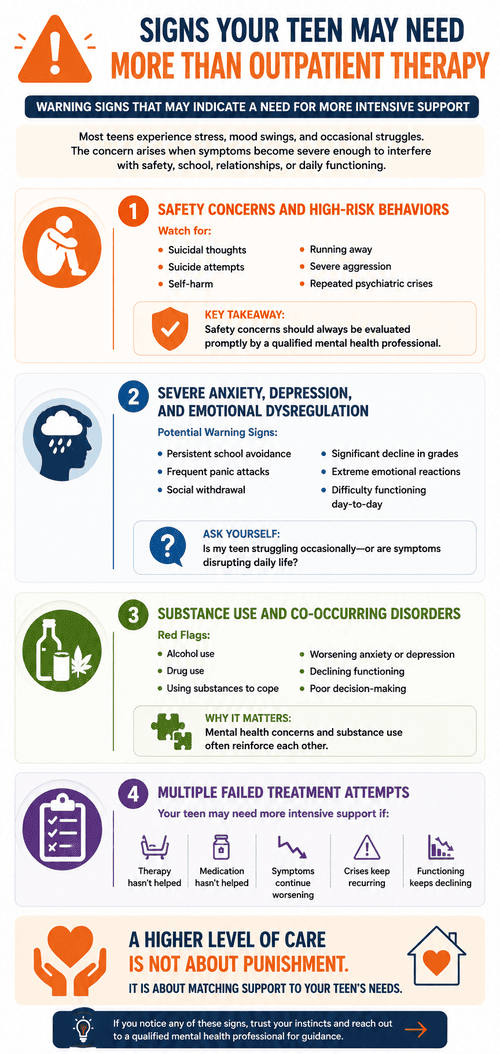
Signs Your Teen May Need More Than Outpatient Therapy
Most teenagers experience periods of stress, emotional ups and downs, conflict with parents, and occasional struggles at school. These experiences are often a normal part of adolescence.
The concern arises when symptoms become persistent, severe, or disruptive enough to significantly interfere with daily functioning. While no single behavior automatically means residential treatment is necessary, certain warning signs may suggest that more intensive support should be considered.
Safety Concerns and High-Risk Behaviors
Safety concerns are among the most common reasons adolescents are referred for intensive treatment.
Examples include suicidal ideation, suicide attempts, self-harming behaviors, repeated psychiatric crises, running away from home, severe aggression, or other behaviors that place the teen or others at risk. When safety becomes an ongoing concern, weekly therapy appointments may not provide the level of monitoring and support necessary to keep a teenager safe.
Any concerns involving suicide, self-harm, or dangerous behavior should be evaluated promptly by a qualified mental health professional.
Severe Anxiety, Depression, and Emotional Dysregulation
Mental health conditions alone do not automatically justify residential treatment. Many adolescents respond very well to outpatient therapy, family support, school accommodations, and medication when appropriate.
About 16.1% of adolescents ages 12-17 have a currently diagnosed anxiety disorder, making it the most common behavioral and mental health condition among teens.
Similarly, many teens experience depression, mood instability, or emotional distress at some point during adolescence.
The important question is not whether a teen has anxiety or depression. The question is how significantly those symptoms affect daily life.
Warning signs may include persistent school avoidance, severe social withdrawal, frequent panic attacks, inability to maintain friendships, dramatic declines in academic performance, overwhelming emotional reactions, or difficulty functioning in everyday situations.
For example, a teenager who feels anxious before exams may benefit from outpatient therapy and support at home. A teenager who has not attended school for months because of panic attacks despite therapy, medication, and school interventions may require a more intensive level of care.
Protective factors like physical activity, adequate sleep and supportive relationships are associated with lower rates of poor mental health among high school students.
These protective factors matter, and many families appropriately begin with lifestyle changes, therapy, school accommodations, and psychiatric support. However, when symptoms continue to worsen despite these efforts—or when a teen becomes increasingly isolated, impaired, or emotionally overwhelmed—more intensive treatment may be worth exploring.
Substance Use and Co-Occurring Disorders
Substance use can complicate nearly every aspect of adolescent mental health.
Some teens begin using alcohol or drugs in an attempt to cope with anxiety, depression, trauma, or social difficulties. Unfortunately, substance use often worsens the very symptoms they are trying to escape.
When substance use occurs alongside mental health concerns, treatment becomes more complex. These co-occurring disorders frequently require integrated treatment that addresses both issues simultaneously.
Multiple Failed Treatment Attempts
Perhaps one of the clearest indicators that more intensive treatment should be considered is a history of unsuccessful treatment attempts.
Many families arrive at residential treatment only after trying numerous interventions. They may have participated in outpatient therapy for months or years, completed psychiatric evaluations, tried medication management, worked with schools, and implemented recommendations at home—yet the teen continues to struggle.
This does not mean those efforts were wasted. In many cases, they provide valuable information about what has and has not worked. However, when symptoms persist, functioning continues to decline, or crises become increasingly frequent, residential treatment centers for teens may provide the structure and intensity needed to create meaningful change.
When Residential Treatment May Be the Right Choice
For many families, the decision to pursue residential treatment does not happen overnight. More often, it comes after months—or even years—of trying to help a struggling teen through outpatient therapy, psychiatric care, school supports, and family interventions.
In fact, many adolescents benefit significantly from these approaches. About 61% of youth with anxiety go into remission after completing CBT treatment, with results remaining stable over time. Cognitive Behavioral Therapy (CBT), medication management, family therapy, and school-based accommodations can be highly effective for a wide range of mental health concerns.
However, there are situations where these interventions are no longer enough.
Residential treatment may be appropriate when safety concerns persist despite ongoing care, when emotional or behavioral symptoms significantly impair daily functioning, when school attendance has collapsed, or when repeated attempts at outpatient treatment have failed to produce meaningful improvement. It may also be appropriate when substance use disorders, severe mood disorders, trauma-related symptoms, or multiple co-occurring conditions require a level of structure and supervision that cannot realistically be provided at home.
The goal of residential treatment is not simply to remove a teen from a difficult situation. Rather, it is to create an environment where intensive therapeutic work can occur while reducing the distractions, triggers, and stressors that may be contributing to the adolescent’s struggles.
For some families, residential treatment becomes a turning point that allows a teen to stabilize, develop healthier coping skills, improve relationships, and begin rebuilding a more hopeful future.
Residential Treatment Centers for Teens to Consider
If your family is considering a higher level of support, choosing the right program can feel overwhelming. Every adolescent has unique needs, and no single treatment center is the right fit for every family.
The following residential treatment centers for teens offer comprehensive services and represent different approaches to adolescent treatment. As you evaluate programs, consider your child’s specific challenges, treatment goals, educational needs, and the level of family involvement you are seeking.
Hillside® (Atlanta, Georgia)
Hillside specializes in the treatment of children and teens ages 11 to 17 who are struggling with behavioral health and mental health concerns such as anxiety, ADHD, bipolar disorder, emotional regulation difficulties, and other complex challenges. Located on a 13-acre wooded campus in Atlanta, the program utilizes supervised cottage-style housing designed to provide both structure and support.
The organization offers residential treatment, day programs, and outpatient services, allowing families access to multiple levels of care. Clinical staff are trained in Dialectical Behavior Therapy (DBT), an evidence-based approach that teaches adolescents skills related to emotional regulation, distress tolerance, interpersonal effectiveness, and mindfulness.
Treatment extends beyond traditional therapy and includes recreational programming, horticulture, expressive arts, and other experiential activities designed to help teens build confidence and develop healthier coping skills. An on-site school allows students to continue their education while receiving treatment, reducing academic disruption.
Family involvement remains a central part of the treatment process, helping strengthen communication, improve family dynamics, and support lasting progress after discharge.
Best For: Teens with complex emotional, behavioral, or psychiatric concerns who need significant structure, strong academic support, and active family involvement.
Evolve (California)
Evolve takes a highly individualized approach to adolescent treatment. At its Mount Helix location, enrollment is intentionally limited to six teens at a time, allowing staff to provide personalized attention and tailored treatment planning.
Treatment combines evidence-based modalities such as Cognitive Behavioral Therapy (CBT), Dialectical Behavior Therapy (DBT), and Motivational Interviewing with experiential therapies that include equine therapy, art, music, yoga, surfing, and hiking. This combination can be particularly appealing to teens who struggle to engage in traditional talk therapy alone.
The program operates within a comfortable home-like setting and includes academic support, psychiatric services, recreational amenities, and comprehensive aftercare planning. Family members participate throughout treatment and learn many of the same skills their teen is practicing, making it easier to reinforce progress at home.
Evolve’s small size and individualized approach often appeal to families seeking a more intimate treatment environment.
Best For: Teens who may benefit from individualized treatment, smaller program sizes, and a blend of evidence-based and experiential therapies.
Guardian Recovery (New Jersey)
Guardian Recovery‘s Montville Adolescent Center focuses on teens ages 13 to 17 who are struggling with substance use disorders and co-occurring mental health conditions. Unlike many adolescent residential programs, Guardian Recovery also offers medically supervised detoxification services, making it particularly well-suited for teens whose substance use requires medical oversight.
Treatment combines individual therapy, group therapy, family therapy, life-skills training, and academic support with evidence-based approaches such as CBT, DBT, Motivational Interviewing, and mindfulness-based interventions. The program aims to address both substance use and the underlying emotional or behavioral challenges that often accompany it.
In addition to clinical services, adolescents participate in recreational activities and peer-focused programming designed to build healthy social connections and strengthen recovery skills. Parents remain actively involved through family therapy sessions, treatment updates, and support groups that help prepare the family for long-term success after discharge.
Because the program specifically addresses both addiction and mental health concerns, it offers a more specialized approach than many traditional adolescent treatment centers.
Best For: Teens struggling with substance use disorders, co-occurring mental health conditions, or situations where detoxification and residential treatment may both be necessary.
Frequently Asked Questions
How do I know if my teen needs residential treatment?
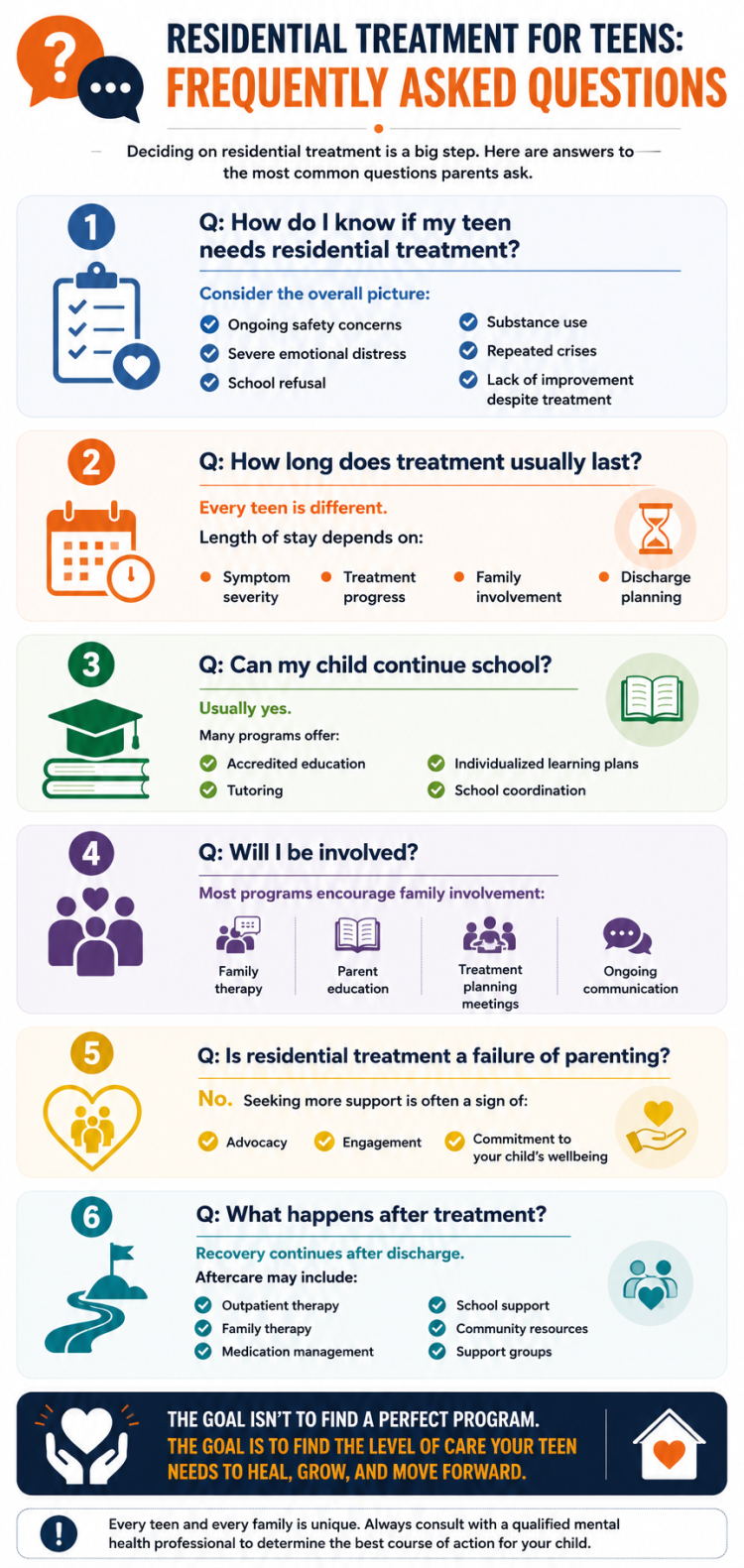
There is no single test or symptom that determines whether residential treatment is necessary. Instead, parents should look at the overall picture. Ongoing safety concerns, severe emotional or behavioral difficulties, significant declines in daily functioning, persistent school refusal, substance use, or repeated mental health crises may indicate that a more intensive level of support should be considered.
If outpatient therapy, medication, school interventions, and family support have not produced meaningful improvement, it may be time to discuss residential treatment with a qualified mental health professional.
How long do teens usually stay in residential treatment?
Length of stay varies depending on the program and the teen’s clinical needs. Some adolescents remain in treatment for several weeks, while others may benefit from several months of care. Factors such as symptom severity, treatment progress, family involvement, and discharge planning often influence treatment duration.
Families should discuss expected timelines directly with any program they are considering.
Can my child continue school while in treatment?
Many residential treatment centers for teens incorporate academic support into their programming. Depending on the facility, this may include accredited educational services, individualized learning plans, tutoring, and coordination with a teen’s home school.
Maintaining academic progress is often an important part of treatment because it helps reduce disruption and supports a smoother transition back home.
Will I be involved in my teen’s treatment?
Family involvement is considered a critical component of successful treatment in most residential programs. Parents may participate in family therapy sessions, treatment planning meetings, educational workshops, and regular communication with the clinical team.
While the level of involvement varies by program, strong family engagement is often associated with better long-term outcomes.
Is Residential Treatment a Failure of Parenting?
No.
Parents often worry that considering residential treatment means they have somehow failed their child. In reality, seeking additional support frequently reflects the opposite. It demonstrates a willingness to recognize when a teen’s needs exceed what can reasonably be addressed through outpatient services alone.
Residential treatment is not about punishment or giving up. It is about providing a level of support that may not be available in the home environment.
How should I evaluate residential treatment centers for teens?
Not all residential treatment centers for teens are the same. Parents should look for programs that utilize evidence-based therapies, employ qualified clinical staff, provide psychiatric services when needed, and actively involve families in the treatment process.
Academic support, individualized treatment planning, discharge preparation, and aftercare services are also important considerations.
Do not hesitate to ask detailed questions about a program’s treatment philosophy, staff credentials, safety procedures, outcome measures, and approach to family involvement. Reputable facilities should be transparent about how treatment is delivered and what families can realistically expect.
What happens after residential treatment ends?
Discharge planning begins long before a teen leaves residential care. Most programs develop an aftercare plan designed to help adolescents maintain the progress they made during treatment.
This may include outpatient therapy, medication management, family therapy, support groups, school-based services, or other community resources. Long-term success often depends on the support systems that remain in place after a teen returns home.
Final Thoughts
Few parenting decisions carry as much emotional weight as deciding whether a child needs a higher level of mental health care. It is natural to question yourself, worry about making the wrong choice, or hope that things will improve on their own.
The good news is that most teens experiencing mental health challenges respond well to outpatient treatment, family support, school accommodations, and appropriate clinical care. However, when symptoms become severe, safety concerns emerge, or functioning continues to decline despite repeated interventions, residential treatment may provide the structure and support necessary to create meaningful change.
The goal is not to find a perfect program. The goal is to find the level of care that gives your teen the best opportunity to heal, grow, and move forward.
If you believe your child may need more support than outpatient treatment can provide, speak with a qualified mental health professional and begin exploring your options. Taking action today may be the first step toward helping your teen regain stability, confidence, and hope for the future.